
The Cat in the Box
/If you’ve followed me for some time, you know that along with being a writer, traveler, and food geek, I’m also a clinical psychologist. Which means I spend about 25 hours a week talking to people about what’s hard and figuring out how to make those hard things easier.
At least, that’s how I explain my job to children who are convinced I’ve got a shot hidden behind my back.

All this to say, I spend a lot of brain space thinking about how to help people connect their hearts and their minds. So much space that I frequently relate a concept to psychology that probably doesn’t belong there.
Enter Schrödinger’s cat.
When I first heard about this quantum physics thought experiment, it struck me in a way that had nothing to do with quantum or physics because, frankly, those words don’t make much sense to me separately, let alone together. It hit me as prime psychological real estate.
The thought experiment Schrödinger proposed was something like this (with hearty apologies to Schrödinger, who I’m sure would find the use of his highbrow physics in this way highly irregular):
Put a cat in a closed box with a mechanism that has a 50/50 chance of killing it. Until you open the box and observe what happened, the cat is described by quantum mechanics as being in a superposition of both alive and dead.
I suppose it’s akin to the tree falling in the forest, in that a state isn’t really a state until it’s recorded by humans. Humans being the center of the universe and all.
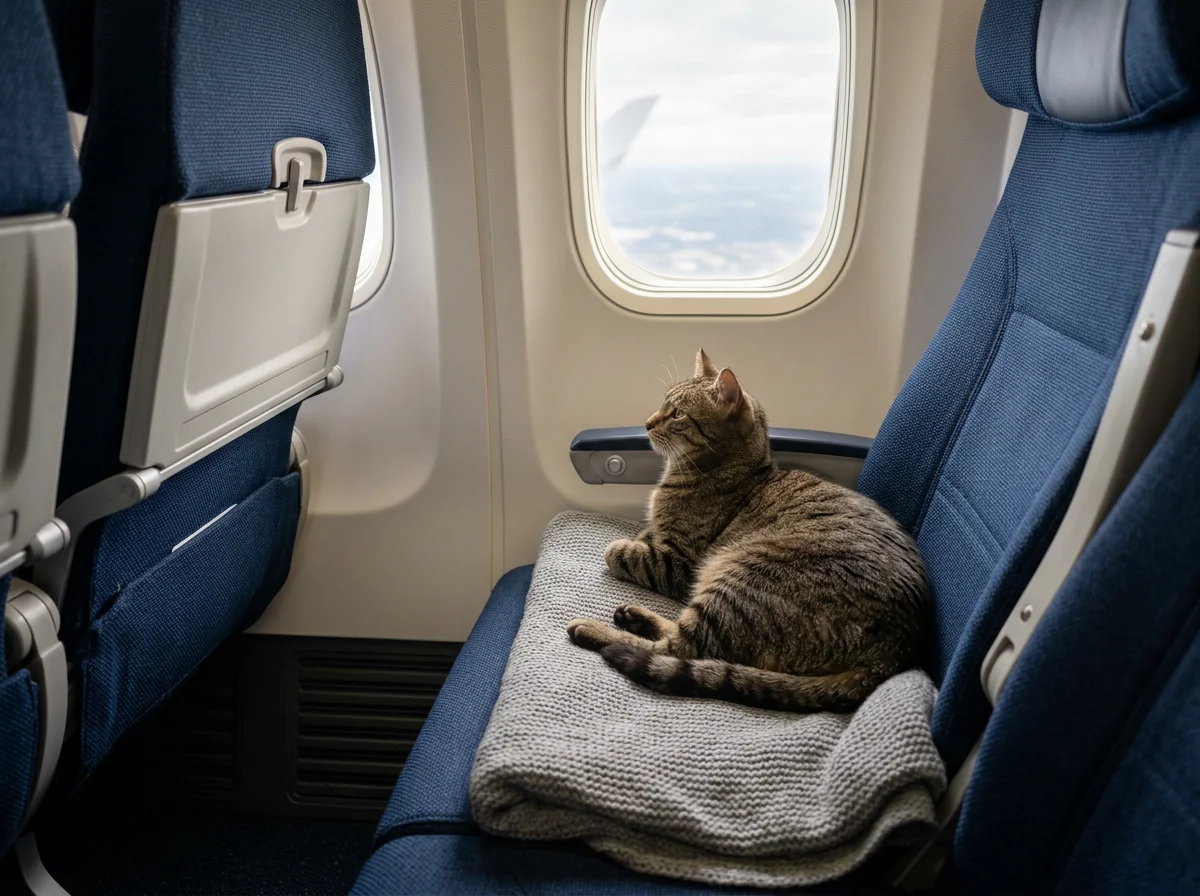
Maybe Schrödinger didn’t mean it that way. Maybe his thought experiment has more to do with quantum mechanics and the problem of applying it to the everyday world. All of that is firmly above my pay grade.
The reason I fell in love with this thought experiment right out of the gate is how elegantly it summarizes the many ways I’ve been trying to unshackle clients from anxiety.
I’ve tried variants of “don’t borrow trouble” and “let future you handle it; we know she can” and “bracing for impact causes more soft tissue damage in car accidents than when you don’t see it coming.”
I’ve even told the story about how, when I rode horses competitively in college—true story, though lest you get some image in your mind of me sitting on a dancing dressage horse or flying over logs in pursuit of a fox, let me hasten to add that I didn’t even start riding horses until college, so while I did get to the jumping level of competition, they were baby jumps you could step over without breaking stride—my trainer told me that I stiffened before jumps in a way that confused my horse and shattered my form.
She told me that on the next line of jumps, she wanted me to close my eyes.
This sounds far more dangerous than it was.
Yes, these jumps were higher than the babies I rode over in competition, but it was a run of three jumps and then, two horse strides later, another run of three. There was no room for a horse to pivot or exit the lineup, once the horse leapt the first jump, she was on the hook for all six.
Even so, I thought my trainer must have taken a deep hit of a bong or something.
Nevertheless, people pleaser that I am, I nodded and turned away before the trainer could note the blood draining from my face.
I got my horse, Jessie, into a good pace and steeled myself as I approached the first jump. Fighting every ounce of survival instinct at my disposal, a stride before Jessie hit the line, I closed my eyes.
Suddenly, the scent of rising dust from the ring filled me. The sound of Jessie’s predictable, constant hoofbeats drowned out the beating of my heart. I felt buoyed, as if in warm water, floating over the jumps like rolling on the ocean under a sky drenched blue with eternity and wonder.
I opened my eyes after the sixth jump to find my trainer jumping down from the rails, running around with her arms raised in triumph. “Yeeeeeeees! Yes, yes, YES!”
My heels stayed down. My body stayed fluid.
I tracked all that. I understood that my form was much improved. But what I couldn’t get over was the way I felt.
Euphoric.
It was the first time it occurred to me that not stiffening in preparation for the challenge ahead might actually have an upside.
And so we return to Schrödinger’s cat.

Because as much as my clients claim to love the story of “Michelle takes a line of jumps blind,” expressing curiosity and asking follow-up questions and nodding along about how they can take this idea with them, it rarely has staying power.
With the notable exception of when I use it with people who ride horses, which, since I practice in Virginia, is not an insignificant amount of my caseload.
But something about that cat in a box captures people’s imagination in a way nothing else has.
Maybe because it sounds so preposterous, and humor is a known antidote to anxiety. Maybe because it inserts a pause of psychological distance into the anxious reflex of “what if?”
Because coupled with the idea of the cat existing in both states simultaneously, I add this:
You can do nothing by assuming the cat is dead, or worrying that the cat is dead. In fact, you lose valuable emotional resources. If you assume the cat is alive and you’re wrong, you haven’t eroded your coping bank by worrying, and so you can deal with the loss better than if you’d spent the time next to the box wringing your hands.
As a person who runs anxious, I use Schrödinger’s cat all the time.
If I’m worried my late plane will cause me to miss my connection, I tell myself: “In this moment, the plane is in time for my connection and late for my connection. I’ll assume it’s on time until I pull into the airport and know for sure. At that point, I’ll have the information I need to make a call—run or rebook.”
I know many people (possibly even my husband, but it’s not my job to out him) who compulsively follow flights on the Flighty app to find out what is happening with a plane long before it’s due on the tarmac. I’m sure it helps because if things are about to go sidewise, you can sniff it out early and rebook before anyone else knows something is afoot. Which is laudable.
But I’m going to stick with the cat in the box.
It works for other kinds of travel anxiety, too.
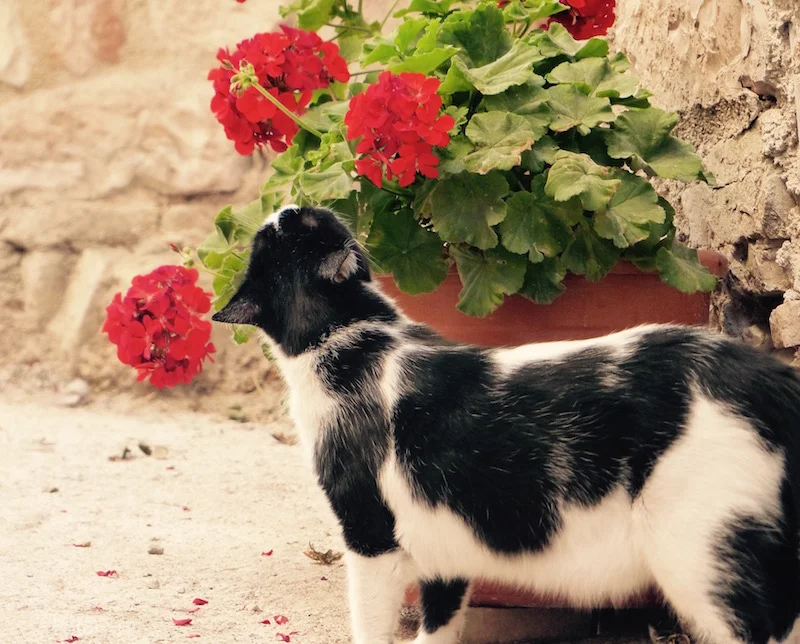
In fact, I credit Schrödinger’s cat with helping me relax my fear of speaking in foreign countries. Until I open my mouth, I won’t know if I’m going to botch it or not. So I’ll just go forward and see what happens.
And maybe that’s the magic of the cat.
It forces us to name what we’re afraid of.
A failed connection? Okay, well, spending the night in Charlotte is certainly a pain in the ass, but ’tis hardly a catastrophe.
Making a mistake in front of strangers? I actually value embracing the fool. Keeps me humble. Keeps me from taking myself too seriously. And if I give a grocer something to laugh about with his buddies after work, well, then, I also like being helpful.
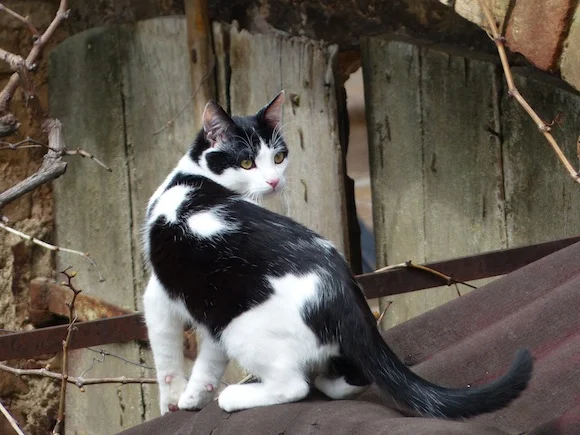
Was that hotel so cheap because each room comes complete with a nest of rats? If I can’t make friends with the rat, I can make friends with the cat and walk out and book someplace else. Again, a pain in the ass, but booking a new hotel is firmly in my wheelhouse.
It works for my clients, too.
I can’t tell you how many texts I’ve gotten from clients that read:
“The cat is alive!”
Of course it is.
It usually is.
I am here to tell you, from rich and varied personal experience, anxious people worry about things that will almost never come to pass.
And when the door opens and disaster slips out, well, my client and I can have the comfort of a clear mind and sturdy shoulders to face whatever comes next.
PS: Want to take this idea on the road to wander places in Italy few tourists see? Click the button below and I’ll instantly send you the free Italian Hidden Gems Starter Kit, complete with practical information on five destinations most tourists miss. The kit includes when to go, what to eat, where to day trip, and MORE!