
The Little Umbrian Lentil that Could
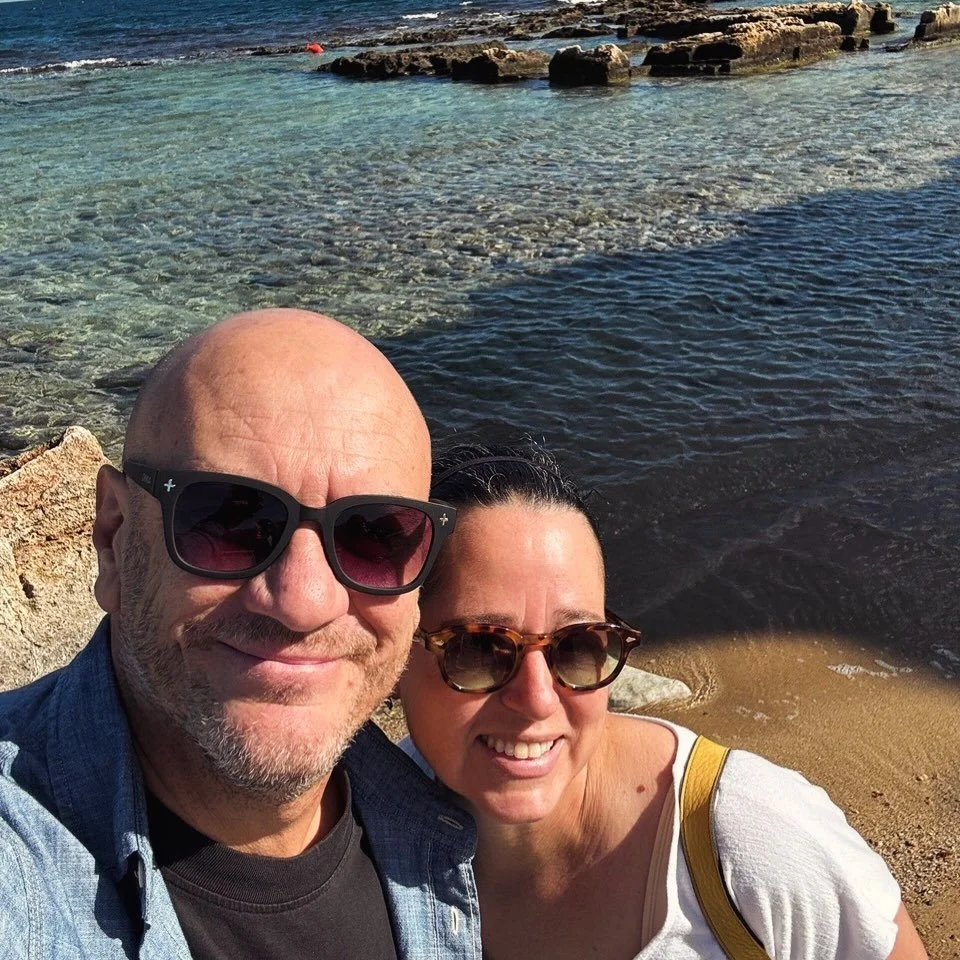
/There’s a hidden little port town called Boccadasse in Genoa—buildings in sunset-hued salutations, water rustling over clicking pebbles, aprons drying in the sea breeze. A lovely interlude in a trip to bustling Genoa, but the moment that stands out to me was sitting on the curb with my coffee gelato next to Max, my partner in Book Club with a View tour groups, and a person I consider a neighbor, since he lives a few cities over from my Spello home.
“Michelle,” Max murmured, before looking around.
I stopped mid-slurp. Max rarely uses a soft voice. He’s cultivated the strong tones needed to project into the back of a van or across busy Italian streets.
Sometimes hush calls for more attention than volume.
I turned to him.
He thrust his hand into his omnipresent backpack and pulled out a plastic-wrapped package. With another darted look over his shoulder, Max palmed it to me.
My first thought was that I had inadvertently signed up to be some sort of drug mule. Was this cocaine? I don’t know much about cocaine. Does it come in olive green?
I turned the package over, read the label, and threw a hug around Max’s shoulders.
Lentils.
Not just any lentils.
Lentils from Castelluccio.
Immediately, my mind whirled, remembering the stone village of Castelluccio, high in the Umbrian Mountains, before the village was shaken by the 2016 earthquake that devastated this part of Umbria and Marche, including nearby Norcia.
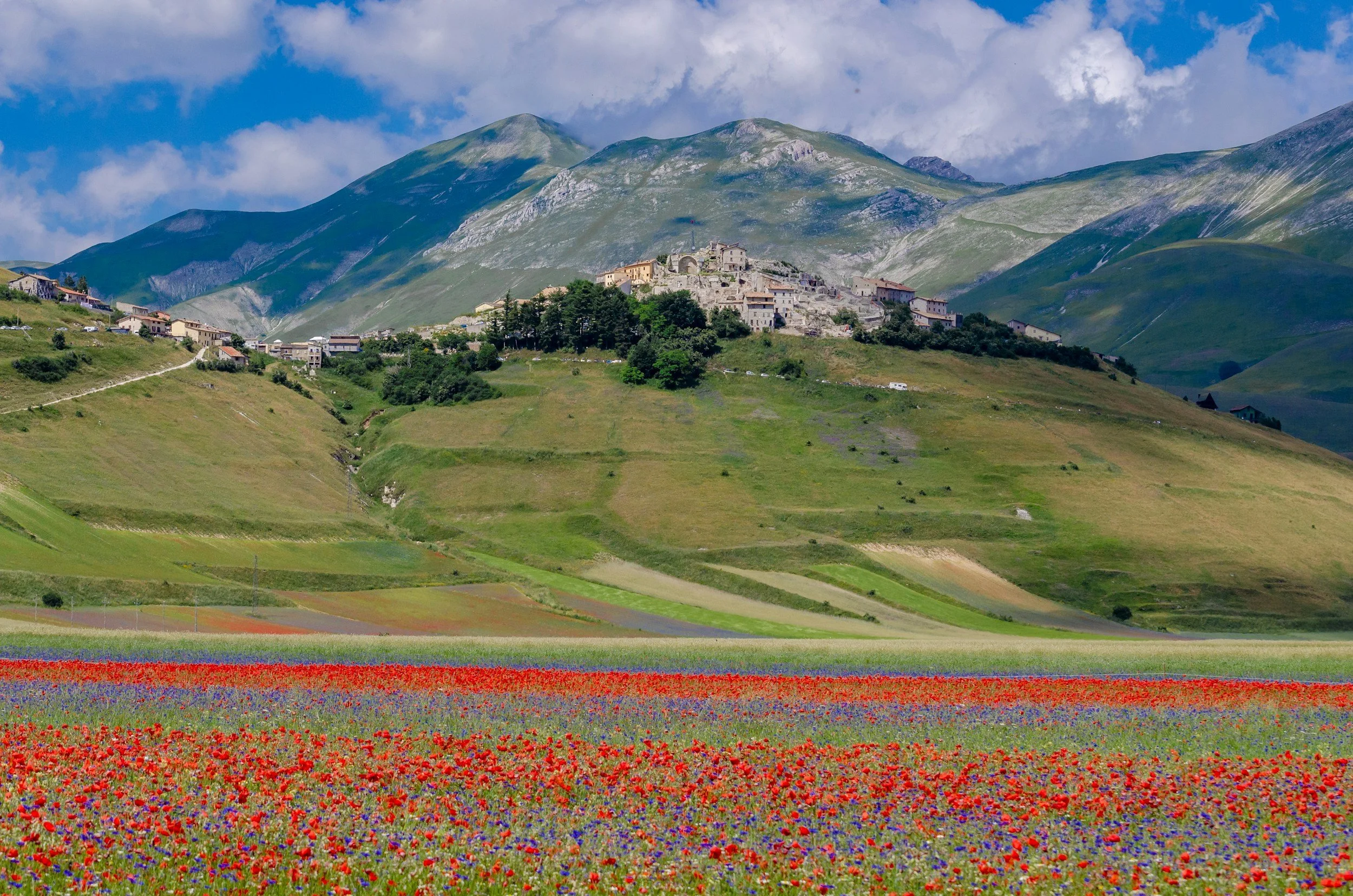
I remembered the Piano Grande, the undulating high-altitude plateau that surrounds Castelluccio, striped with poppies and cornflowers and every shade of green and gold and purple during the famous fioritura, the flowering of these meadows.
I remembered the lentils I boiled simply with celery and good Umbrian olive oil in my Spello kitchen while my children’s heads bowed over their homework.
And I remembered the truly exceptional lentils I ate on New Years Eve in Spello, over a decade ago ago now. Lentils from Castelluccio, I was told, before I had any idea such a village existed, let alone that it presided over a high-altitude meadow that belongs in a children’s fairy tale.
Add in the name of those mountains—the Sibillini—and it becomes even more the stuff of fantasy.
A fantasy that, I maintain, you can taste.

And it’s not just me. Castelluccio lentils are so beloved that they have their own protected designation. Why? Well, besides the fact that they don’t need soaking, these tiny lentils boast the ability to hold their shape in cooking.
If most lentils are the food equivalent of burlap, lentils from Castelluccio are satin.
Smooth. Earthy. Creamy. A meltingly soft skin holding in a world of flavor.
Far more than anyone would predict from such a tiny thing.
Part of that comes from where they grow.
Castelluccio sits at roughly 1,400 meters above sea level, where winters are long and brutally cold and the growing season is short. The soil is rough, those lentils have to work to grow.
And then there is that fioritura.
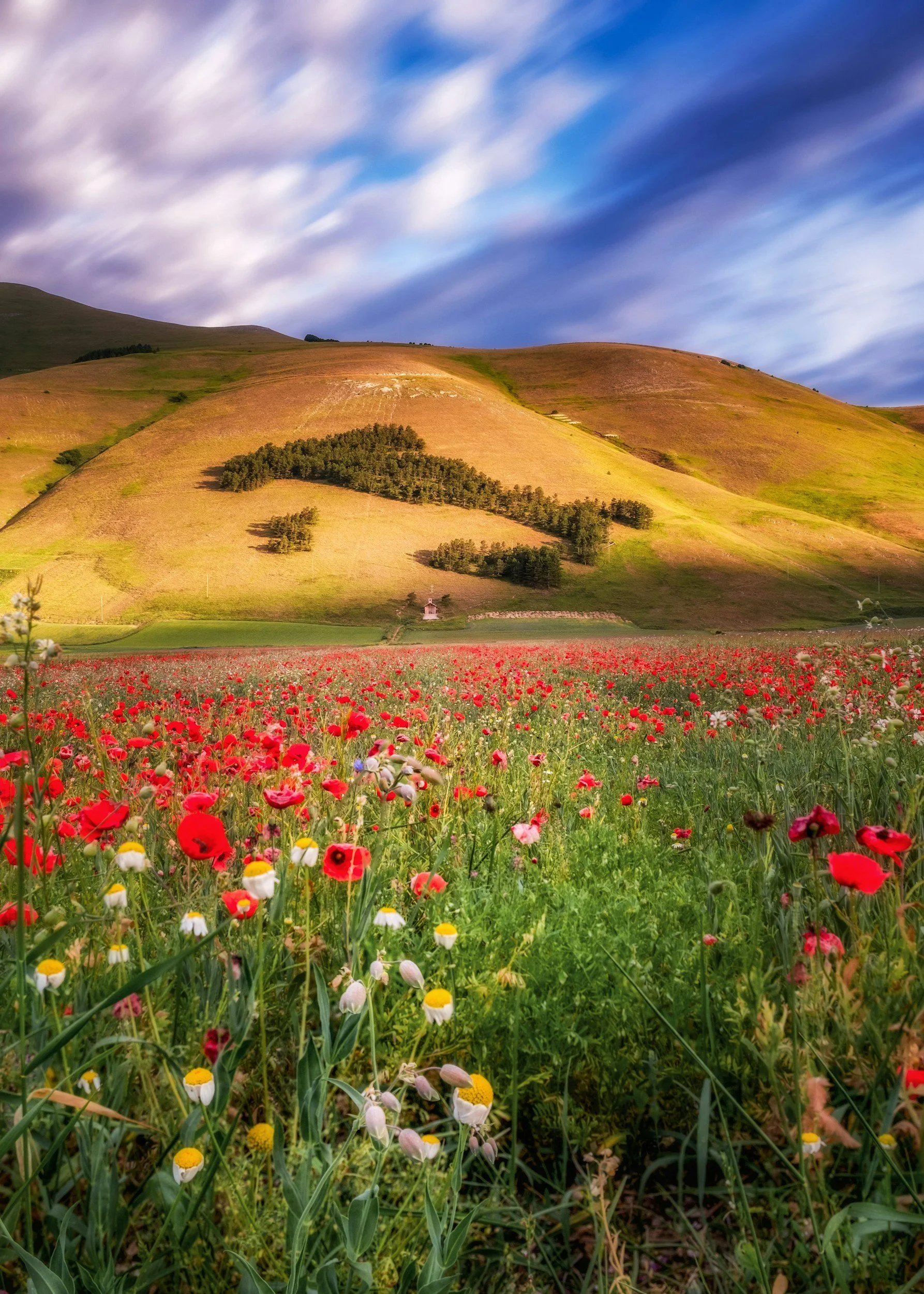
For a few weeks each year, the Piano Grande explodes into color. Imagine the white lentil flowers, streaked with violet, nodding and murmuring in the breeze alongside poppies, cornflowers, mustard and other wild plants. Together, they create an exploding patchwork of reds, purples, yellows, and blues. Stumble across a photo online and you’d be forgiven for assuming it a painting, rather than a photograph of an agricultural landscape.
I swear you can taste all that.
In fact, those New Year’s lentils left such an imprint on me that I recently had the main character in my Murder in an Italian Village series, Stella, make them for a guest.
In the book, the guest praises Stella’s skill with the legume.
Stella knows the secret isn’t in her skilled hands.
It’s in those lentils.
So maybe I can be forgiven for clutching that little packet to my chest in Boccadasse, already planning a meal upon my return.
Nothing fussy or elaborate.
Just Castelluccio lentils simmered until tender, with celery and carrot and onion, plenty of good Umbrian olive oil. Maybe a wedge of torta al testo tucked beside the bowl.
You can keep your fancy foams and spherified gel.
For me, some of the true magic of eating can be found in a tiny lentil harvested on a high plateau in Umbria.
My own photo from the Piano Grande below, along with my lentil soup recipe.
Want to discover more off-the-beaten-path Italy? Click the button below and I’ll instantly send you the Italian Hidden Gems Starter Kit, complete with practical information on five destinations most tourists miss. The kit includes when to go, what to eat, where to day trip, and MORE!
Castelluccio Lentils
3 tablespoons good extra-virgin olive oil, plus more for serving
1 small onion, finely chopped
1 carrot, finely chopped
1 stalk celery, finely chopped
1-2 garlic cloves, minced
1 bay leaf
(optional: a shake of red pepper flakes)
1 cup Castelluccio lentils (if you can get them, otherwise substitute French green lentils (lentilles du Puy), rinsed
About 3 cups water or light vegetable broth
Salt
Black pepper
Sauté the onion, carrot, and celery in olive oil until tender (don’t let them brown). Add garlic and allow to soften with aromatics for a few minutes. Add bay leaf and pepper flakes, stir, and then add lentils, toss and add water or broth. Add salt and pepper. Bring to a boil, then lower the heat and simmer gently until the lentils are tender, about 20–30 minutes.
Drizzle with top shelf olive oil, the kind that packs a punch.
Serve with bread.
Or, if you’re in Umbria, torta al testo.
Or just eat it by the spoonful over the kitchen counter.
I won’t judge.
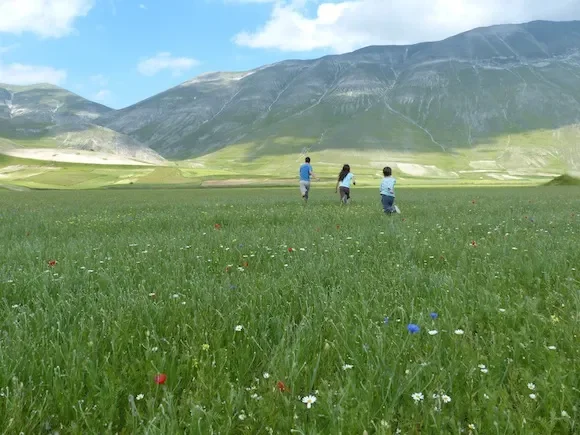
the Piano grande: an italian hidden gem, even beofre the blooms