
Why I Want to Visit Friuli-Venezia Giulia
/There are many trials to pursuing Italian citizenship: paperwork, official stamps that must be obtained within time frames so tight they make one breathless, trying to get birth certificates from town halls that were destroyed decades ago.
And if you’re applying for citizenship through marriage, Italy adds one extra wrinkle: proving that you know Italian.
The B1 exam, specifically (for more on this exam and how I prepared, you can see this post).
You take it at an approved location at a prearranged time, and one section is oral. One at a time, test-takers are called into a room and given prompts to have a conversation in Italian.
Yikes.
Talking to people in Italian made my palms sweaty in general, but in a testing situation? Terrifying.
So I decided to try an app called Tandem, which connects native speakers who want to learn each other’s languages.
When I say I “decided”, you have to imagine all the palm sweat that went into simply setting up an account.
Within a few days, I’d connected with a man named Roberto who, unlike some of the men who reached out, didn’t comment at all on my profile photo and said right up top that he was married. His whole approach was warm and welcoming, and when he asked to move our conversation from text to talking, though you can imagine the slipperiness of my palms, I agreed.
Or, more accurately, I confessed that I was scared.
He calmly said, “That’s why we do it!”
So we chatted one Saturday afternoon, and I was in stitches the whole time.
I wound up connecting with a few other Italians through Tandem, but only Lilliana and Roberto stuck. Lilliana because every conversation has a level of depth and heart I sometimes find challenging to find in the States, and Roberto because, like that first conversation, we laugh the whole time.
When we’re not laughing, I’m learning.
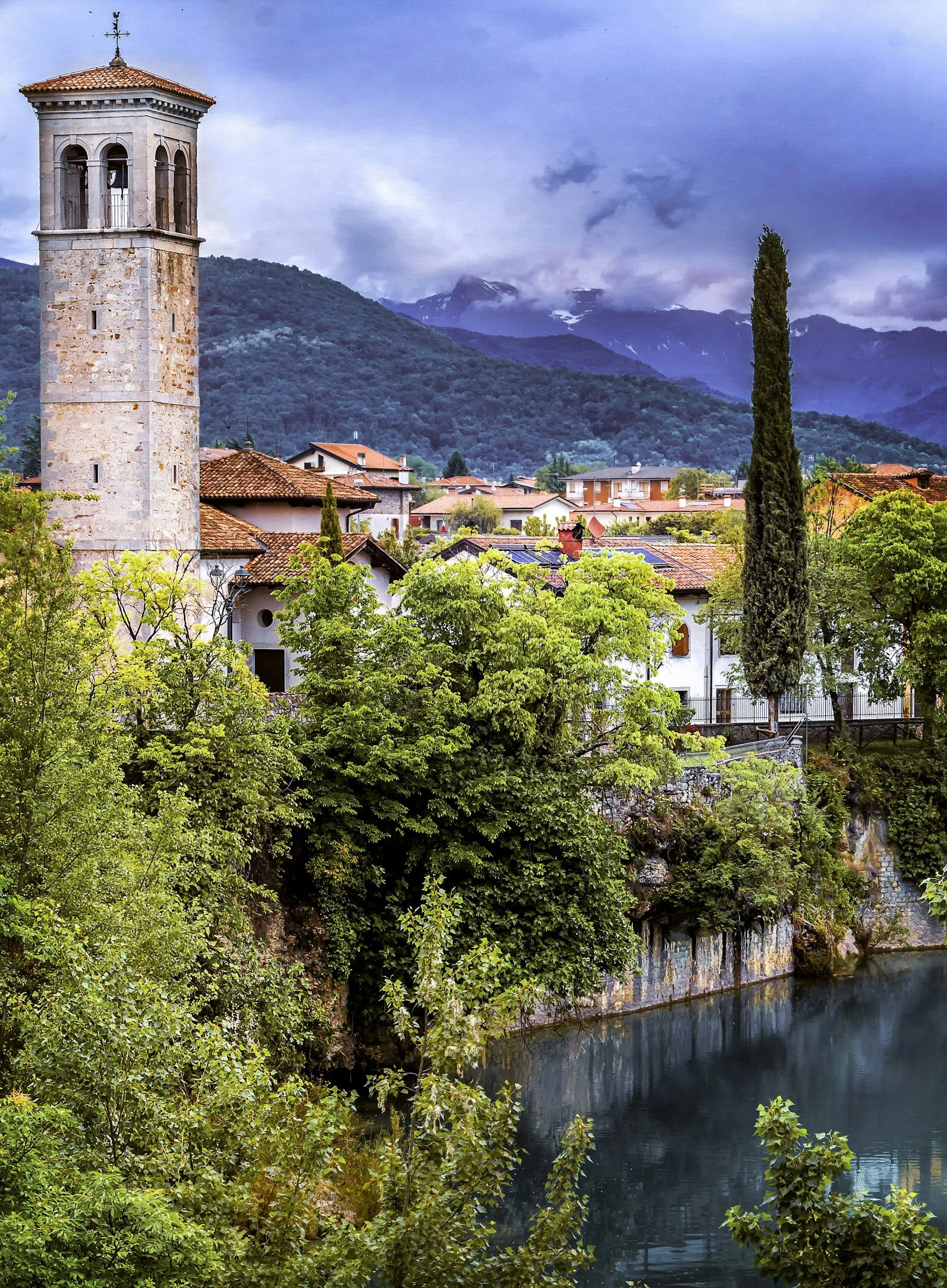
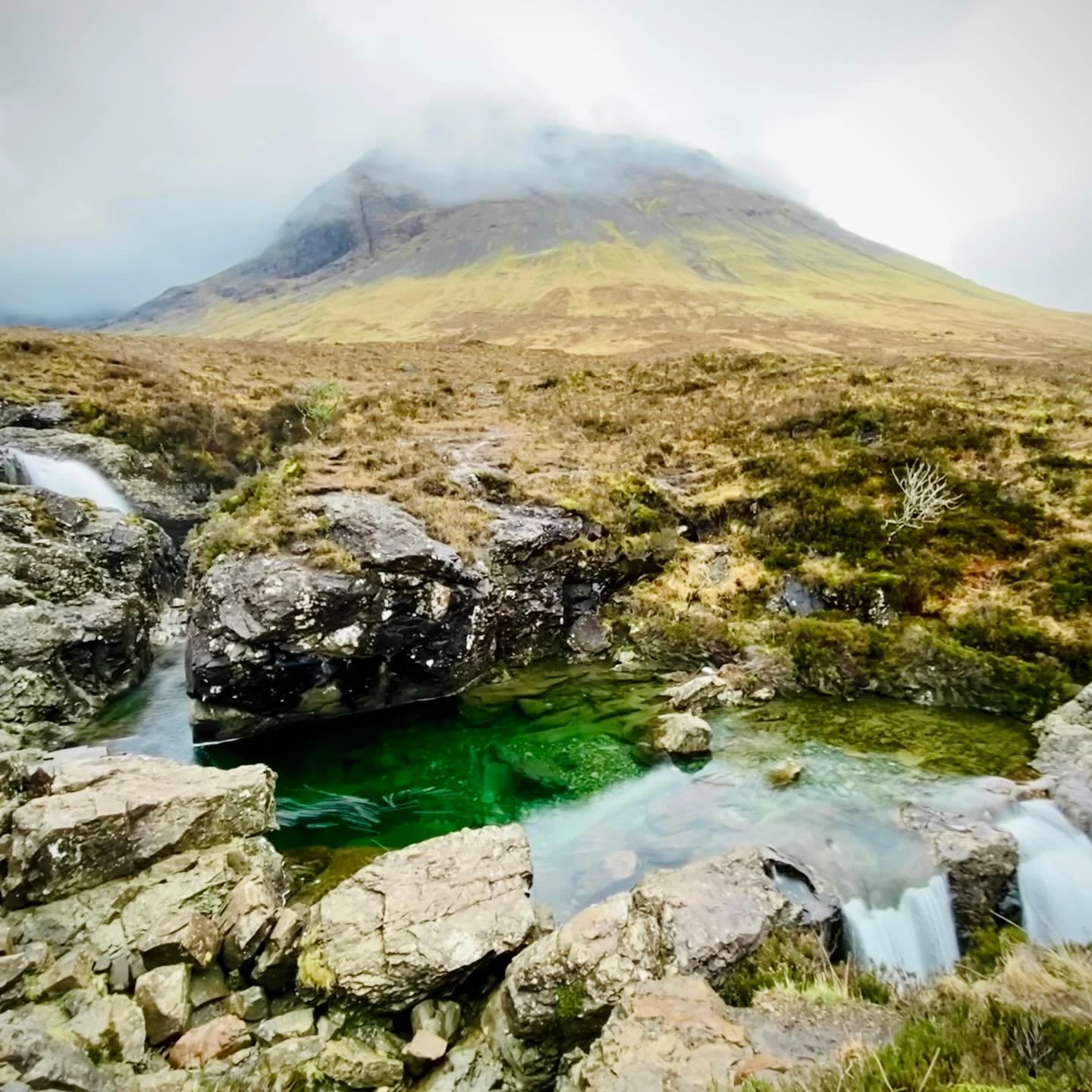
stock image of Friuli-Venezia Giulia: an Italian hidden Gem
Not just the language, though certainly that—as my perfect score on the spoken section of the B1 shows. (There aren’t many places I can drop that into casual conversation, so you can bet your bottom euro I’m doing it now.)
I’m also learning about Roberto’s life in Friuli-Venezia Giulia.
Besides being one of the four Italian regions I have yet to visit, this was an area that had been a kind of blank spot in my Italian understanding. I knew where it was, tucked into the far northeast of Italy, bordering Austria and Slovenia and reaching the Adriatic Sea. But beyond that, my internal image of the region was blurry and thus a bit bleak.
Not anymore.
The advantage of getting to know a region by getting to know a person from the region is that before you know about the history details or important sights, you know about the life.
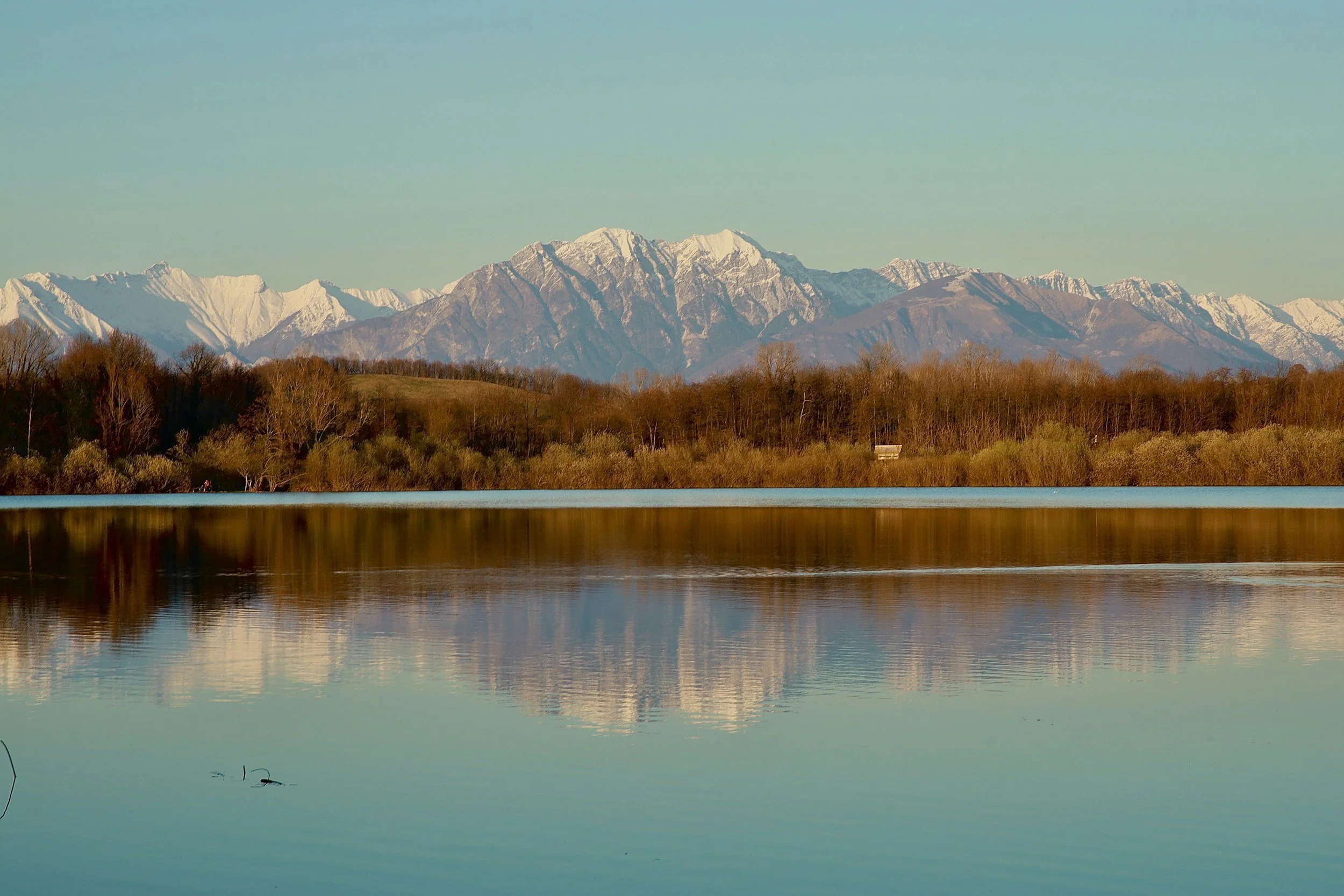
Here’s what I learned about Friuli-Venezia Giulia first from Roberto, through WhatsApp messages and conversations, and then from his wife, Simonetta, when we eventually all met up in Venice for an aperitivo that confounded our waiter who orbited our table for ten minutes before finally interjecting: “How do you all know each other?”
Fair question, we must have been a curiosity—an obviously Italian couple with an obviously American family, all speaking Italian.
We left that aperitivo in possession of cookies from Friuli-Venezia Giulia and a handmade bag made by local people with learning differences, but more importantly, I left with a much clearer picture of the place and the people who call it home. Here’s what I’ve gleaned thus far from my friendship with Roberto and Simonetta (who now pops in occasionally when I’m chatting with Roberto to ask about the kids and are the storms in Texas causing any difficulty for them):
First: mountains.
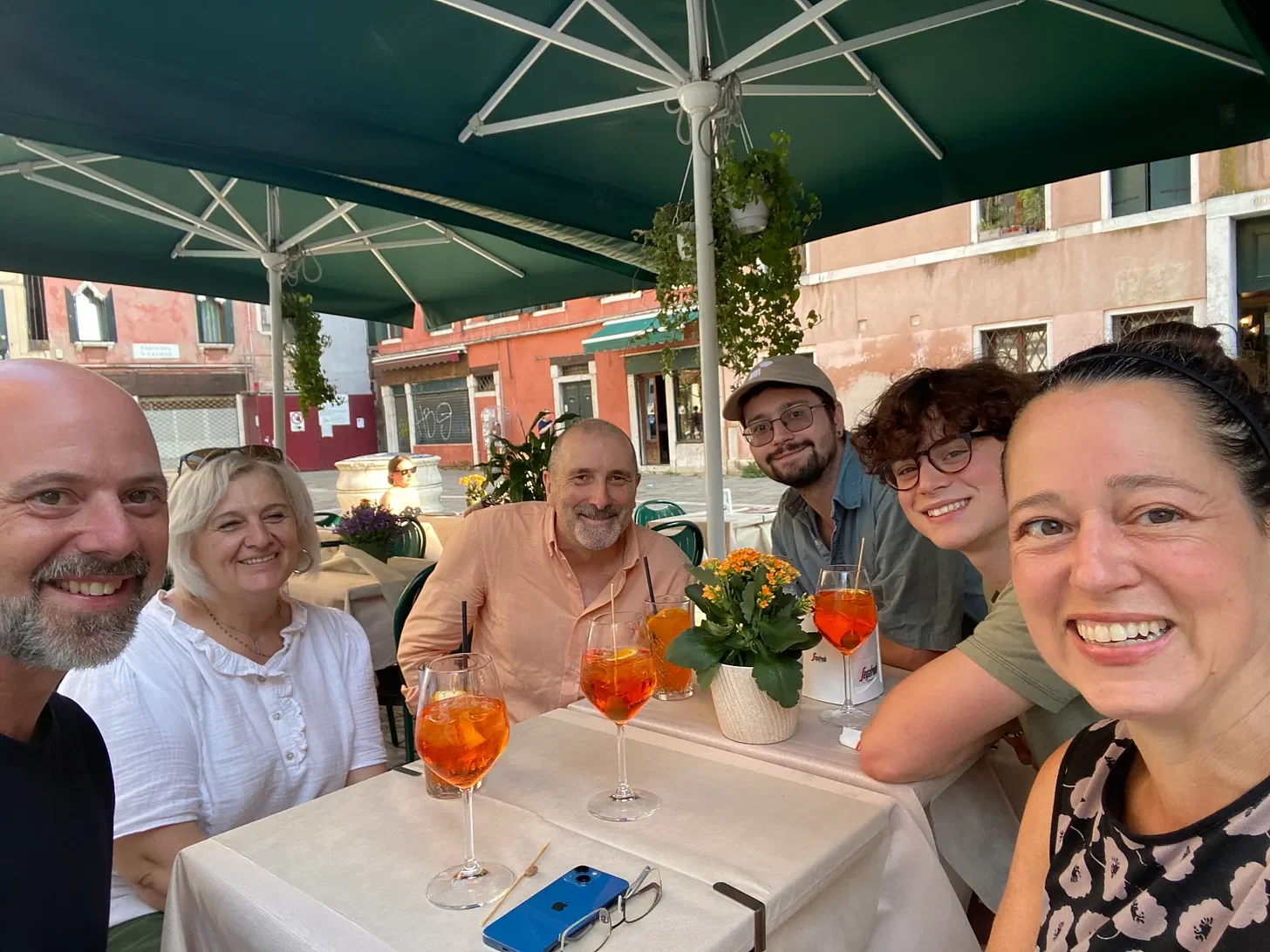
Heaps of mountains.
Friuli-Venezia Giulia has the Julian Alps, which I dipped a toe into during a visit to Slovenia, the Carnic Alps along the Austrian border, and part of the Dolomites. His Dolomiti are different than what we visited last year–wilder, and somehow vaster. I can’t tell you how many times Roberto has sent me a photo from his hike through limestone peaks and dizzyingly blue waters and I send it back with an arrow pointing at the part where I want to live. And then he tells me about lunch on those hikes and I moan aloud.
Mountain life.
But not only mountains.
The sea, too.
There are days when Roberto goes from mountains to sea in the same text thread.
So: mountains, sea, but also lagoons.
I love a lagoon.
So moody.
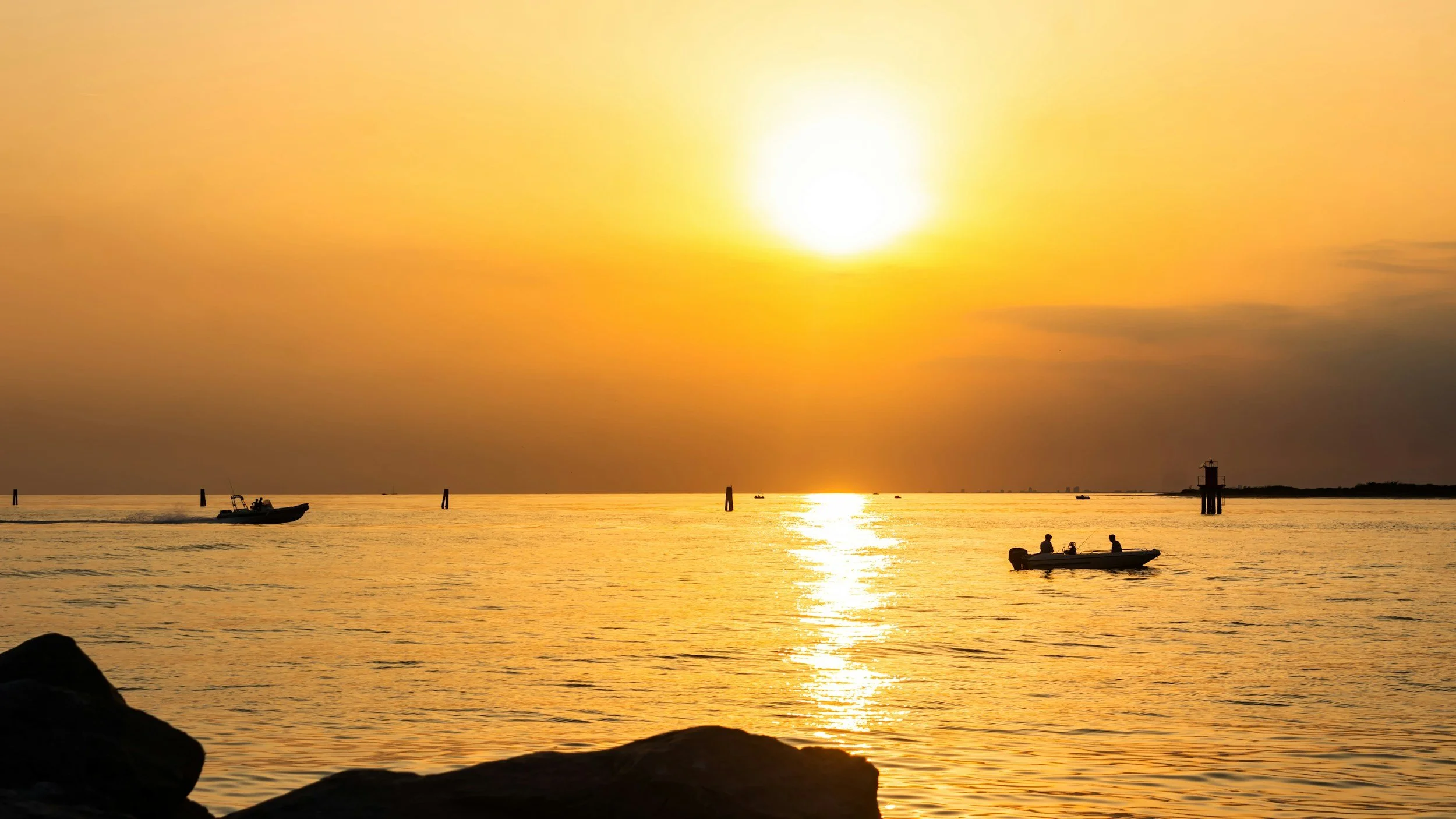
stock image of friuli venezia giulia’s coastline; off the beaten path italy
In one conversation, Roberto told me about Marano Lagunare, a fishing village with a long Venetian history. Marano was part of the Republic of Venice for almost 400 years, but you wouldn’t know it by looking.
Instead of grand canal palaces, the lagoon is dotted with traditional fishermen’s casoni, huts made from reeds and wood. In the photos Roberto sent me, the dwellings looked like thatched-roof cottages dropped into a lagoon.
So bizarre and compelling.
Along with the dramatic and varied landscape, what I look forward to exploring in Friuli is the lifestyle.
My conversations with Roberto always dwindle in the summer, because every evening he’s at a festival in some nearby town with his family and friends. He’s sent me so many videos of bands playing while people sit at picnic tables talking and laughing, with a staggering view behind them.
This is my kind of cultural education.
As you can imagine, I also love hearing about everything Roberto eats. What a curious mix of Italian standards with Slavic and Austrian influences. I keep thinking about the cookies Simonetta brought for us.
And then there’s the wine.
When Keith and I went out for dinner to celebrate my recent book launch, we noticed a dessert wine called passito on the menu. Of course I took a photo of the wine and sent it to Roberto, telling him how much I loved it.
It was so different from Umbrian passito made from Sagrantino grapes, which clunks my palate a little. This one was floral and honeyed and delicate.
Roberto explained that the geology and soils of Friuli help produce wines with these kinds of characteristics, particularly among the region’s white wines. He told me about a wine called Picolit.
Roberto called it “un altro gioiellino tipico friulano”—another little Friulian gem.
He wasn’t sure whether we could find it in the United States.
“If not, we’ll bring you a bottle when we see each other again here in Italy.”
My college-age son has plans to study in Bologna next year, and if that comes through, I’ve decided to take Roberto and Simonetta up on their offer to show us around their region.
After visiting Slovenia, I’ve really grown to understand the appeal of places that don’t feel as though they are sets staged for tourists. There’s a specific kind of joy I’ve found in breathable piazzas, the everyday vibe, the sense of wonder that comes with not having expectations laid out in little boxes.
All of that is true of Friuli-Venezia Giulia, and all of it gives me reasons to go.
But I know the real reason.
Connecting with one of the region’s sons has allowed me access to Friuli’s charms in a way no guidebook or forum discussion ever could.
I know the mountains because I’ve seen them through Roberto’s eyes.
I know the festivals because I’ve watched his videos.
I know the food because he tells me what he’s eating.
And I know there is a bottle of Picolit somewhere in my future.
Watch out, Roberto.
I’m coming for that wine.
Want to discover more off-the-beaten-path Italy? Click the button below and I’ll instantly send you the Italian Hidden Gems Starter Kit, complete with practical information on five destinations most tourists miss. The kit includes when to go, what to eat, where to day trip, and MORE!