
Cowbells and Speck: Finding Italy’s Alpine Soul in the Dolomiti
/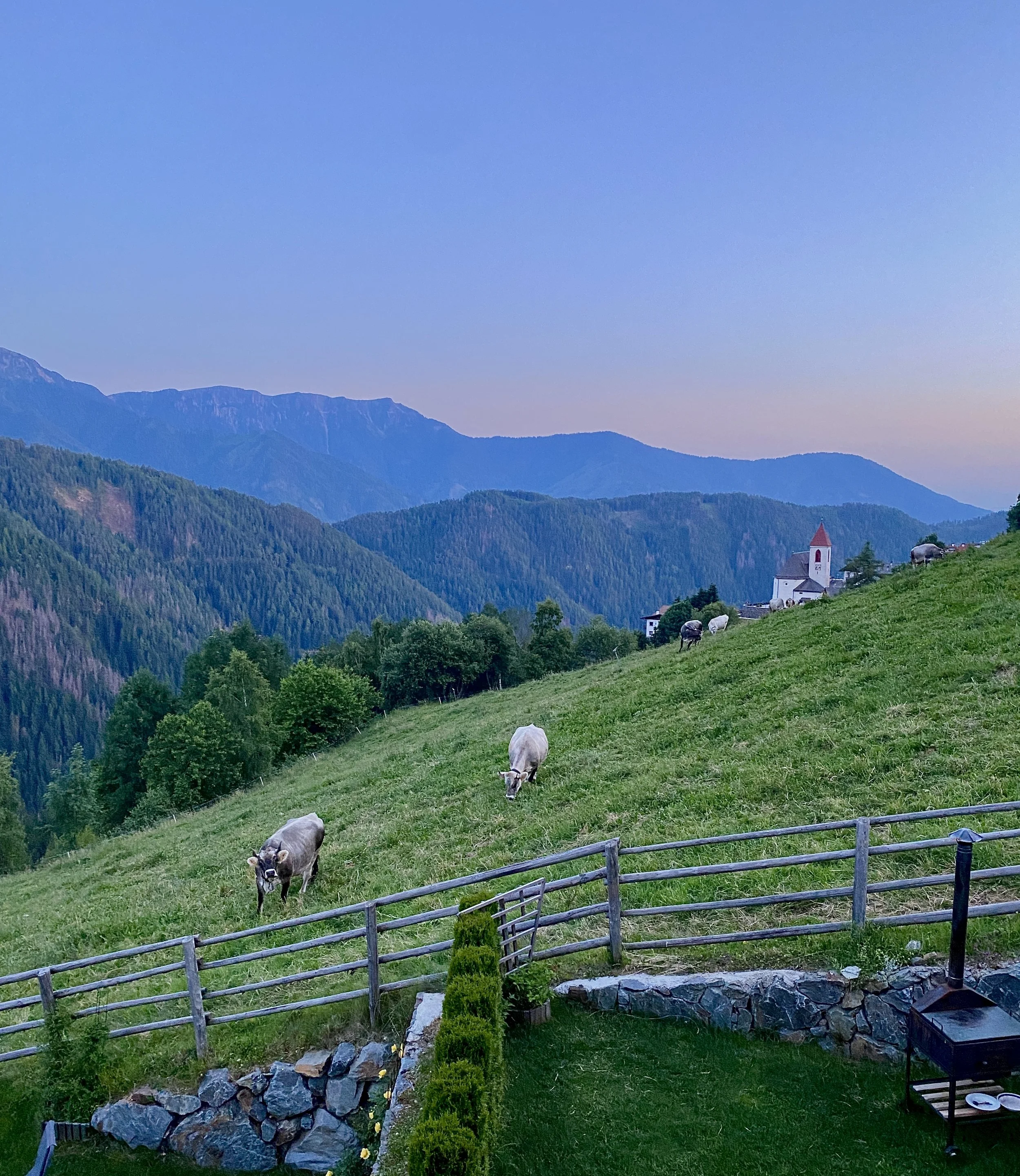
View from my window of the cows coming home in the evening
If the rest of Italy sings opera, the Dolomiti ring with cowbells.
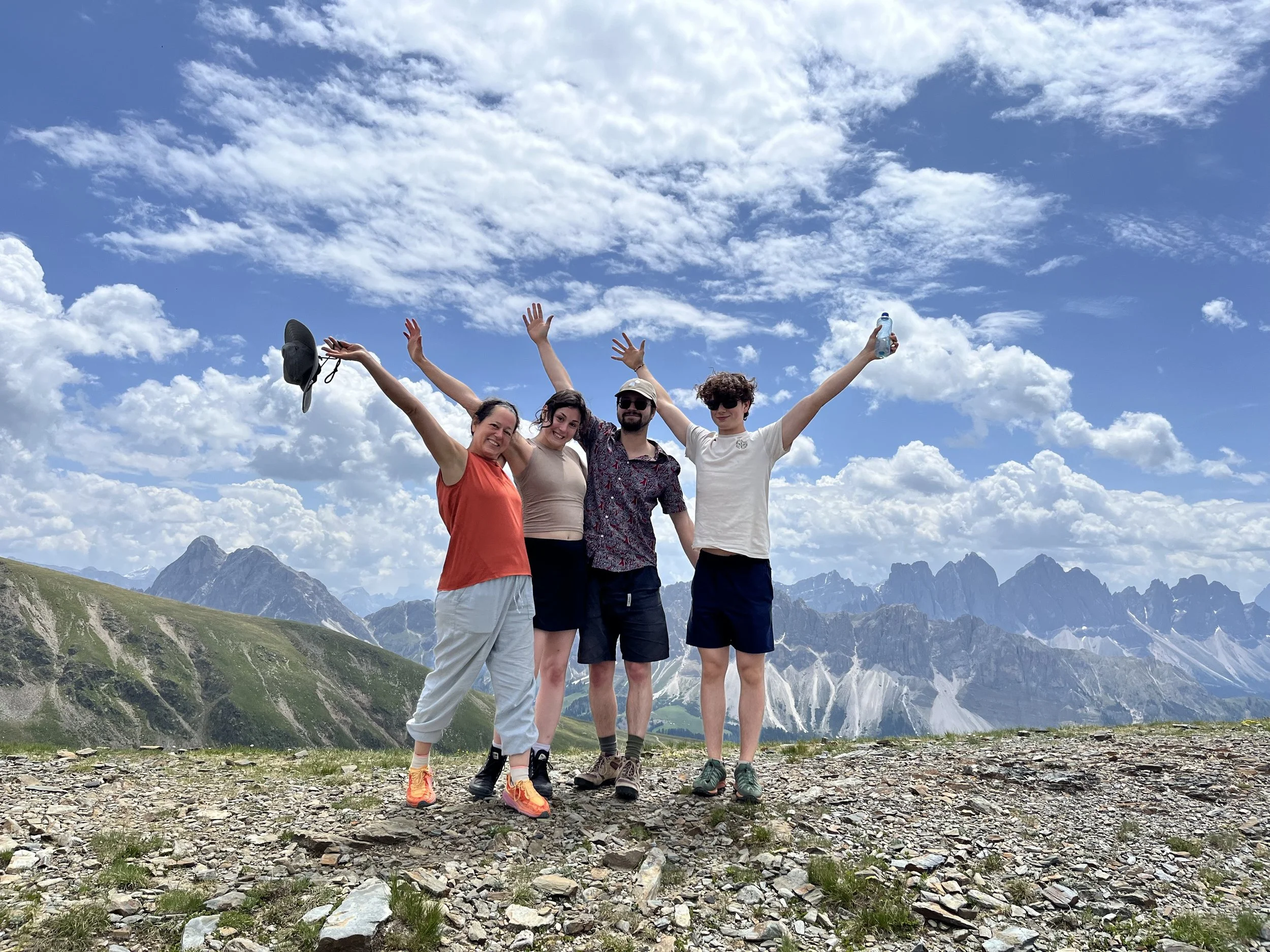
It’s a region that feels both Italian and yet like something else entirely—part Austrian, part Bavarian, part something that only exists here. We spent our week on Plose mountain alternating between thrills and still moments—racing downhill on mountain carts and bikes (okay just the boys did the bikes), then pausing to admire alpine flowers.
We ate strudel instead of tiramisù, speck instead of prosciutto. And we fell asleep each night to the music of cowbells drifting in from the pastures.
Our Agriturismo: The Beating Heart of the Trip
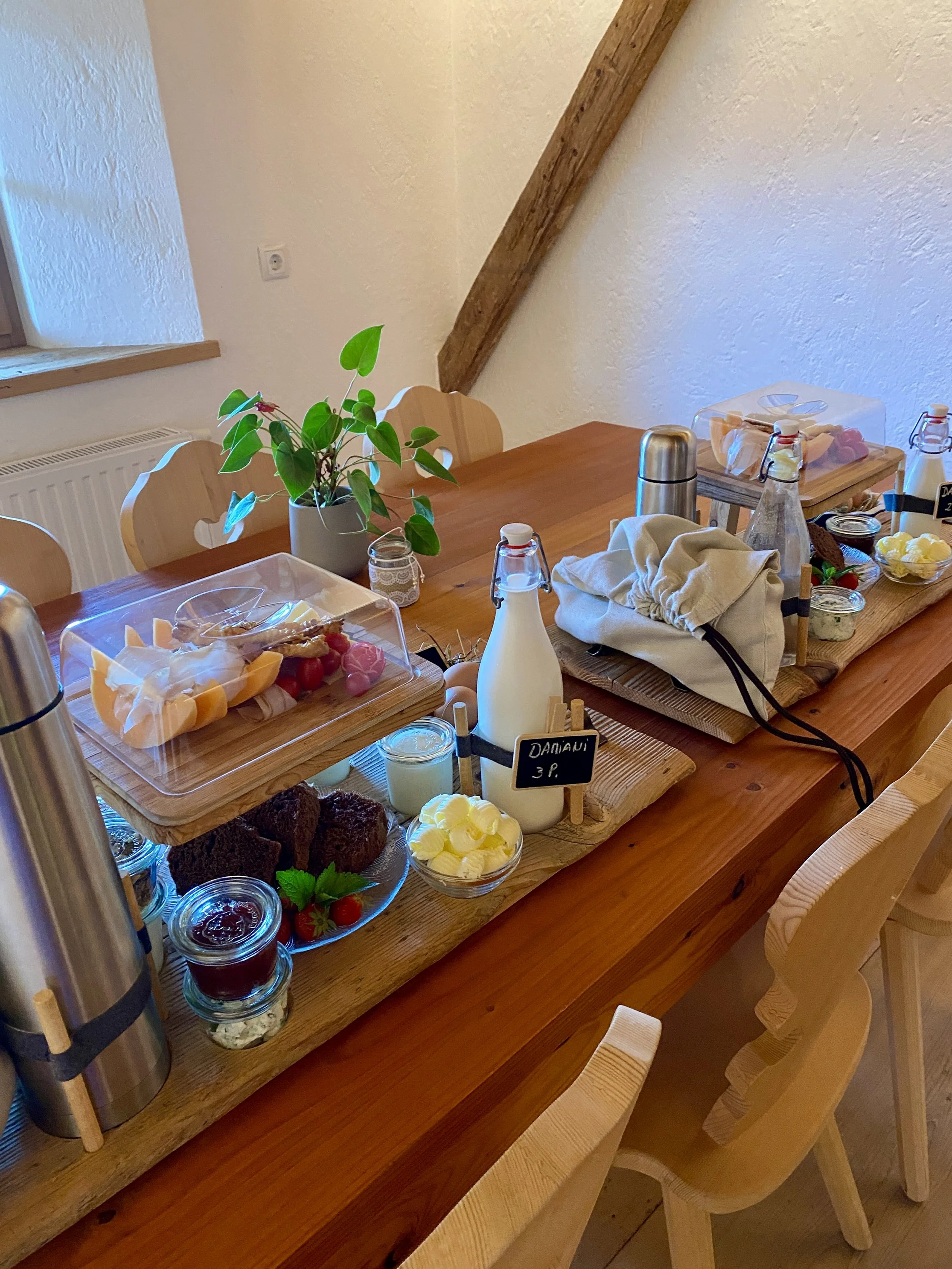
Our agriturismo became the heart of the trip. Imagine cowbells as lullabies, yogurt from morning milk, and jam from red currants. More on how to find your own agriturismo bliss in this post, but suffice to say: a highlight of our Dolomiti trip was living the farm-to-table dream. Especially that first morning when we requested the full breakfast basket and woke up this fantastical display of treats.
Thrills and Stillness
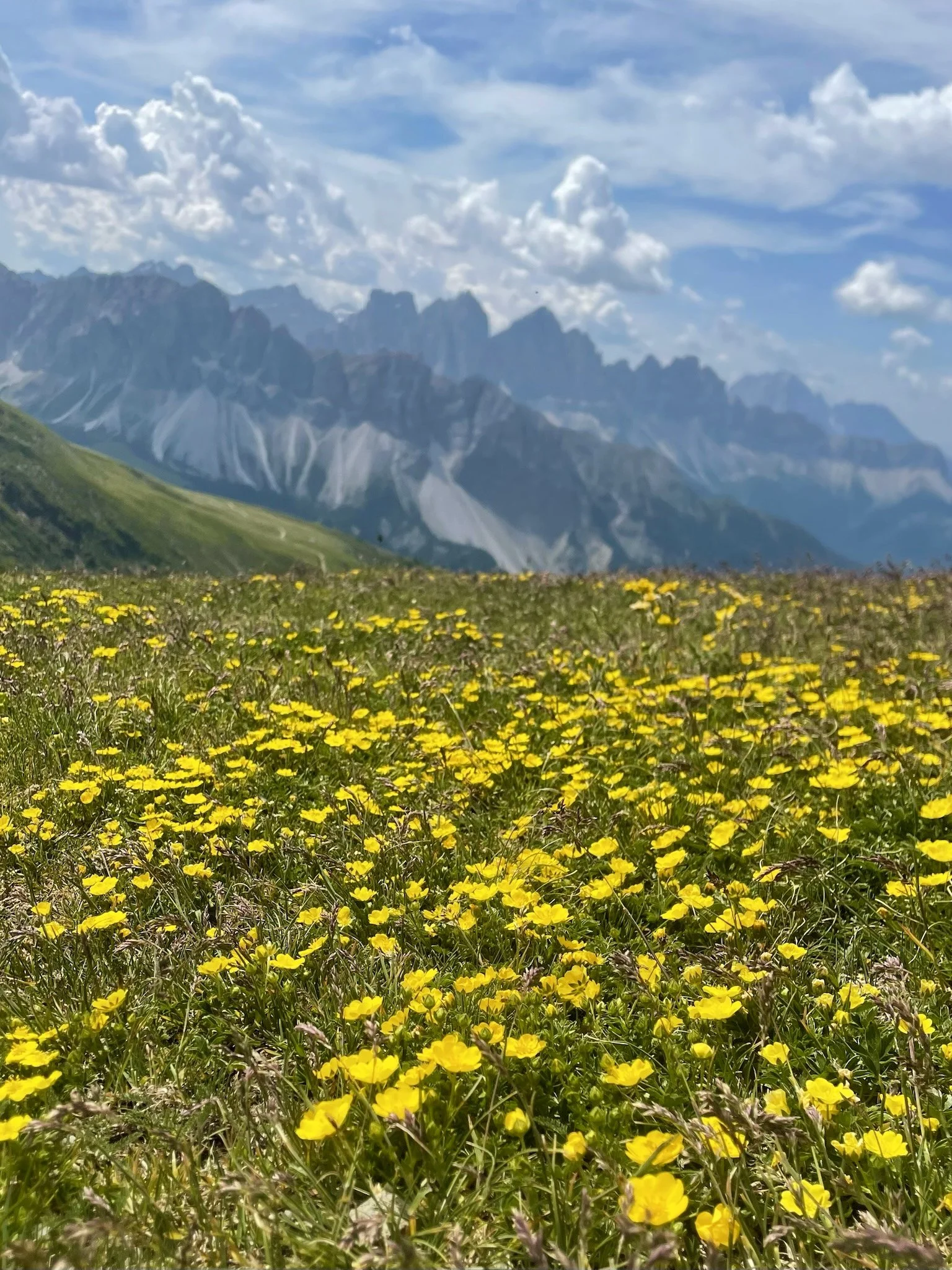
The Dolomiti play a clever game of contrast. One moment, you’re strapping on a helmet to hurl yourself downhill on a mountain cart, heart pounding and brakes squealing (no pedals on these puppies, just brakes). The next, you’re on an isolated trail, pausing to lean closer to a cluster of alpine daisies or milk white rock jasmine. After my art trip to the Pyrenees, I thought I’d gotten used to mountain blossoms—but here, every meadow felt like a living bouquet, the air sharp with pine and wild herbs.
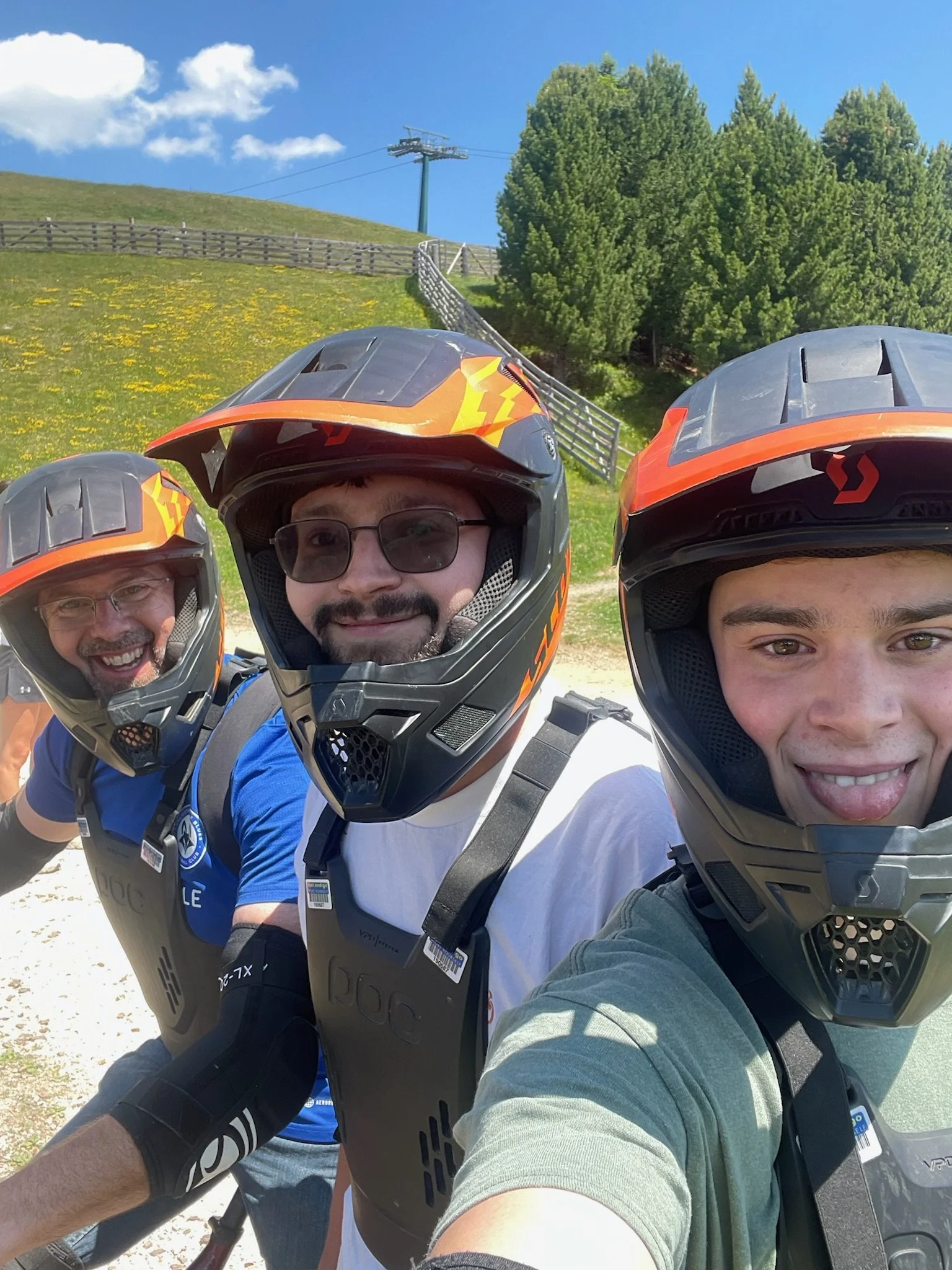
The soundtrack to all of it? Those cows with bells. Their steady clanging accompanied us everywhere: in gondolas, on trails, from our agriturismo balcony. After a while we began to treat it as a cue. Cowbells meant dinner was near, or that we’d reached another alpine pasture, or that the hillsides were alive in their own, non-Sound-of-Music way.
Much as our adult children rediscovered their childlike glee on our agriturismo farm tour (who wouldn’t melt at feeding bunnies?), their eyes shone like kids being handed a balloon when they spotted what they called “variety packs of cows”—one in each pattern, like a sampler box arranged just for us.
As a special and unexpected bonus, staying on a ski mountain in summer means gondolas to the top of the mountain. Little tidbit about me, I’m a person who could walk all day but finds grueling uphill climbs unseemly, so this was a real boon. Especially since our agriturismo came with a welcome package of a gondola ride a day. Each morning we’d take a ride to a peak, then walk to another peak or hike down the mountain or ride down on those fabulous mountain carts.
A Table Set by History
Eating in the Dolomiti bears little resemblance to eating in the rest of Italy. That’s the funny thing about a country that only united under one flag about two hundred years ago: some regions still feel more aligned with their previous alliances than with the tricolore.
Fifty percent of the people in the Dolomiti speak German, forty percent speak Italian, and the remaining ten percent speak Ladino (a Romance language that stopped me in my tracks whenever I heard it). And the food reflects that mix.
It also reflects the landscape, which is obviously different than what we grew used to in our two years in Umbria.
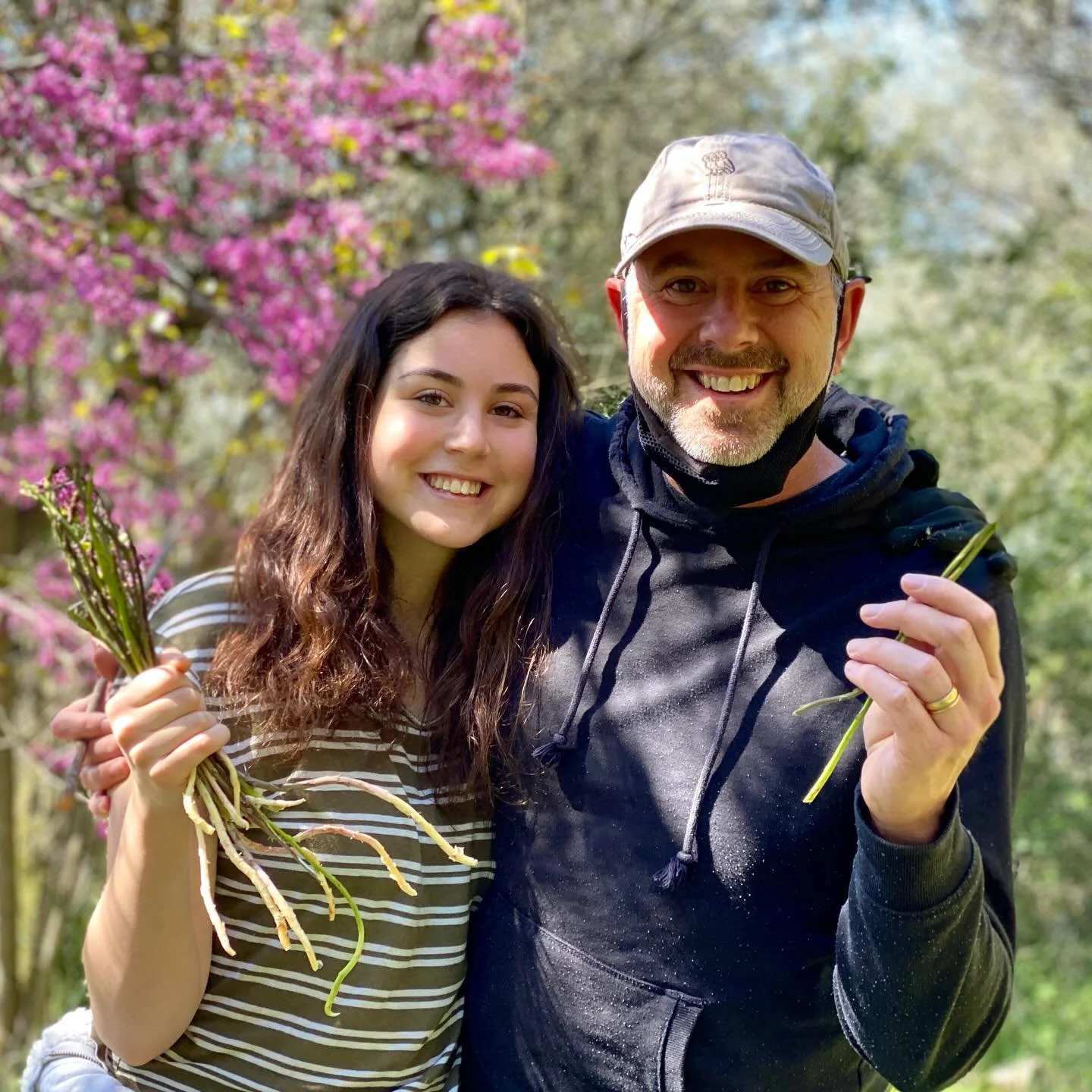
For instance, on our first hike, Gabe noticed the light green edges of darker evergreen branches. He remembered that at Quaker camp, they learned spruce tips were edible. Doubtful, I nibbled faintly and instantly recognized the herbal, lemony flavor as what had flavored the water in our morning agriturismo basket. I had assumed it was lemon, but all of a sudden I connected the spruce tips flavor with the jars for sale in the armoire of the agriturismo with labels picturing piney looking boughs. Sure enough, once back we examined the jars. Spruce tip syrup. This became a flavor highlight of our trip, and we brought many jars of spruce tip syrup home (excellent in water, but also on yogurt!).
So you can bet when we found spruce tip liquor at the grocery store, we scooped up a bottle to replace the armagnac we’d been sipping out of egg cups after dinner every night. With five people sipping (our first trip with three adult children!), the bottle emptied too quickly and we were thrilled for this excuse to try a novelty liquor.
Only it was kind of awful and some of my favorite photos of the trip are of the egg cups, the bottle, and everyone cracking up trying to sip it. Keith insists it was wonderful, but I maintain that’s because he’s confusing the tase of spruce tip liquor with the comraderie of trying to drink it.
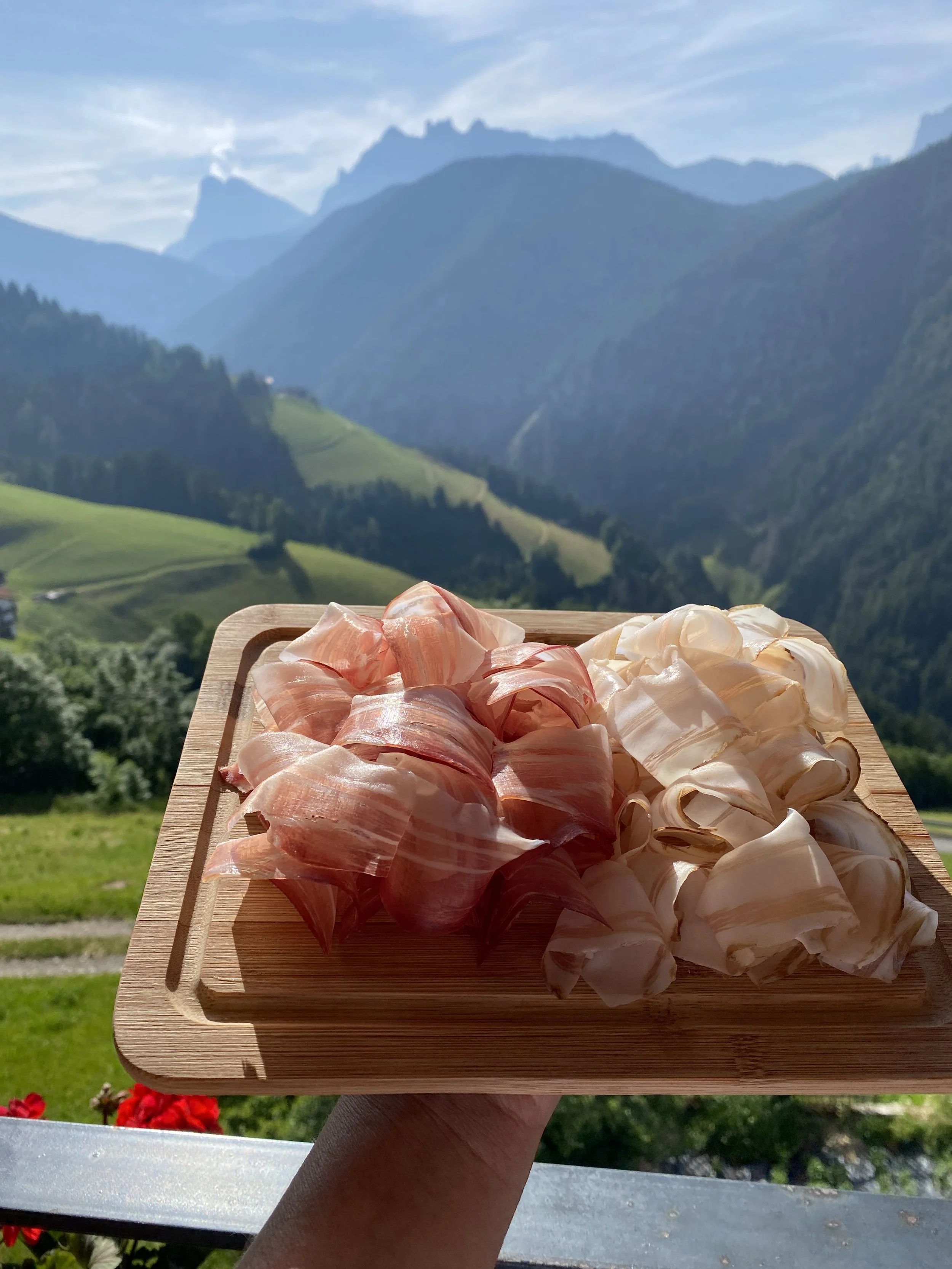
If you have an option of a breakfast basket wherever you stay, I recommend it as an excellent introduction to the culinary delights of the region. Ours certainly primed us notice the particularities of Dolomiti foodways. Each day we found ourselves reaching for dishes we’d never expect in Italy: speck (think prosciutto, but smoked), mountain cheeses, pastries with red currants (or lingonberries or cranberries—we could never quite be sure), canederli (bread dumplings with cheese or speck, which I loved most in soup), sausages, ravioli stuffed with mountain greens, and of course, strudel.
Good thing we were doing so much walking. We earned every bite.
Bressanone: History Over Hype
In researching where to base in the Dolomiti, Val Gardena came up over and over. People wax rhapsodic about the views from Ortisei. I instantly decided that’s where we should stay, but I couldn’t find any agriturismi in the area. It turns out, as a prime skiing destination, it’s filled with pricy resorts rather than farms. So we booked in the mountain above Bressanone (also called Brixen). To be honest, I wondered if we’d regret not staying deeper in the Dolomiti. Maybe the views or the hikes wouldn’t be as amazing.
The fear evaporated when we arrived at our agriturismo and stared in open-mouthed awe at the thrust of peaks towering above green hills.
No regrets.
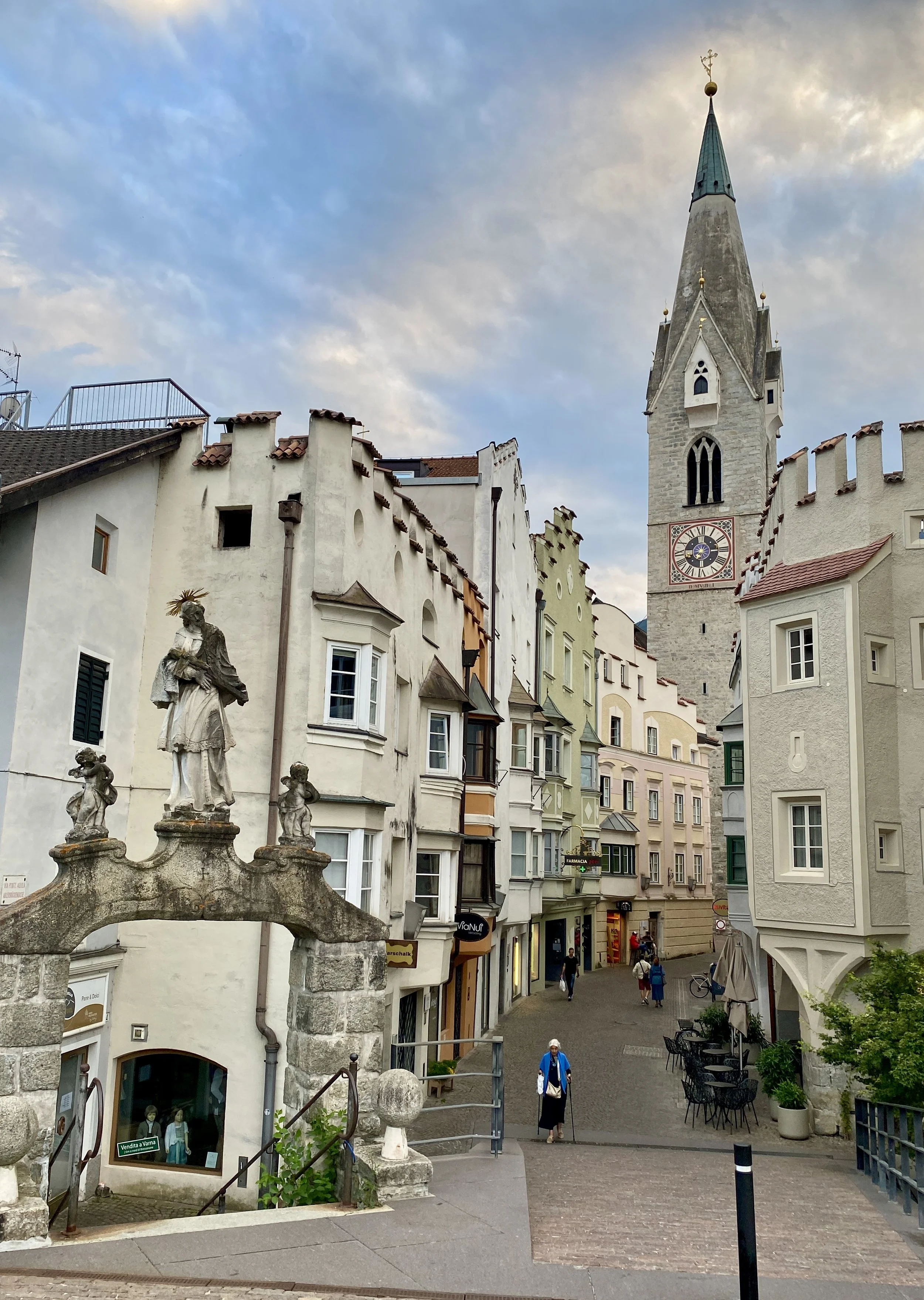
Soon we learned that Bressanone is the oldest town in Tyrol, first mentioned over a thousand years ago, and was once ruled by powerful prince-bishops whose baroque cathedral still graces the skyline. A palette of colors tint Bressanone’s alpine architecture, hinting at centuries of quiet evolution.
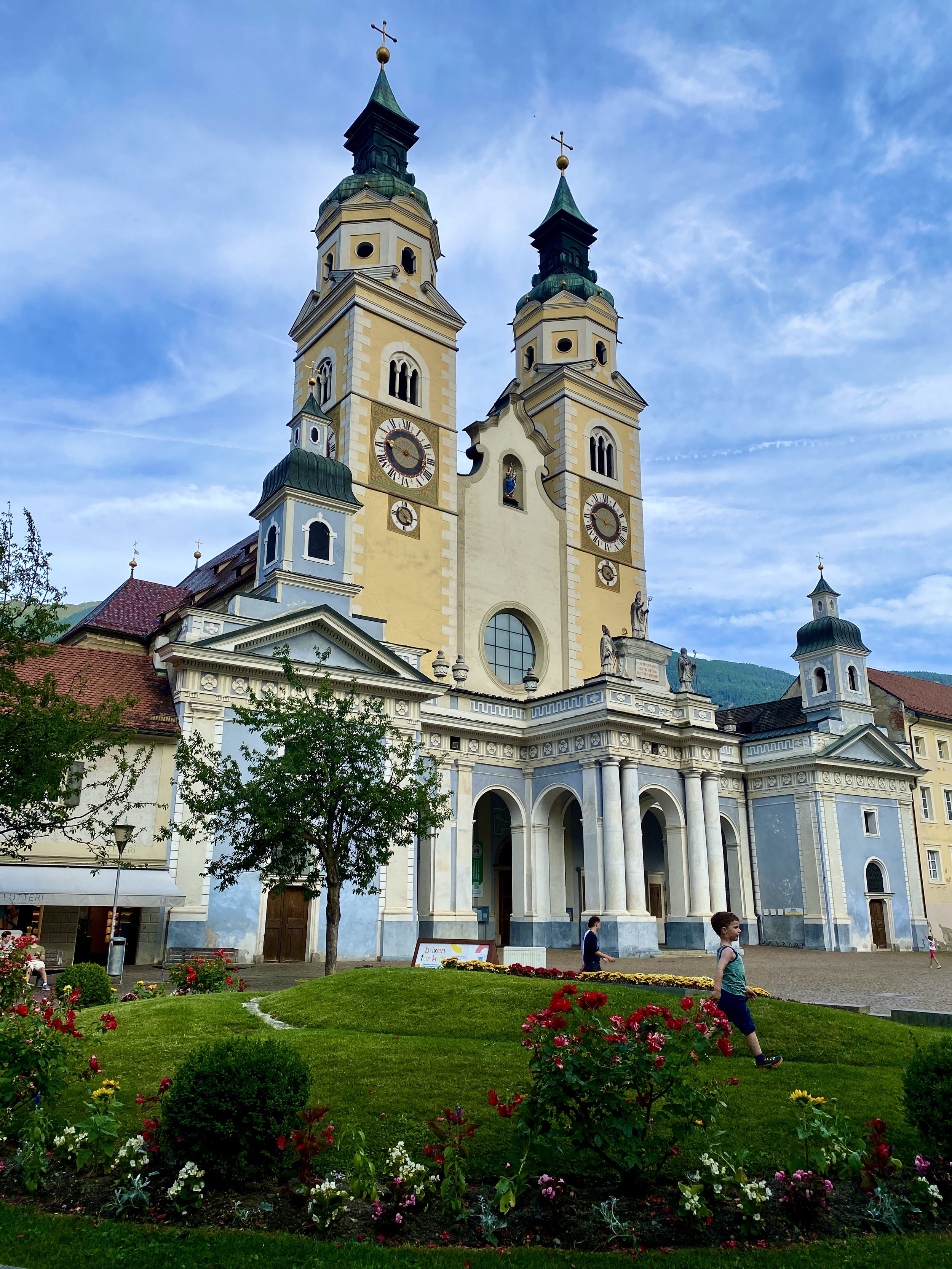
Nestled among vineyard-covered hills, Bressanone is where Alpine charm meets Italian warmth. We wandered piazzas, sipped coffee under colorful facades, and let the town’s slower rhythm anchor us after the adrenaline of mountain rides and hikes. Since it’s a historic town, not a tourist staging area, Bressanone offers the kind of vibrancy that comes with a lifestyle not remade for visitors.
We visited the centuries-old Novacella Abbey, famous not only for its stunning rococo church but also for its frescoes and wine-making. I’m a total sucker for faith, art, wine, and tradition woven together. As we sipped wine at the abbey, I thought being a monk might not be so bad. The abbey was clearly a center of cutting-edge thought and a repository of shifting philosophy—from star charts to botanical drawings to medicine. What a place to call home.
Over the week’s stay, I began to realize that the Dolomiti aren’t just mountains to attack with hiking poles. They’re towns with stories, architecture, and a history of resilience.
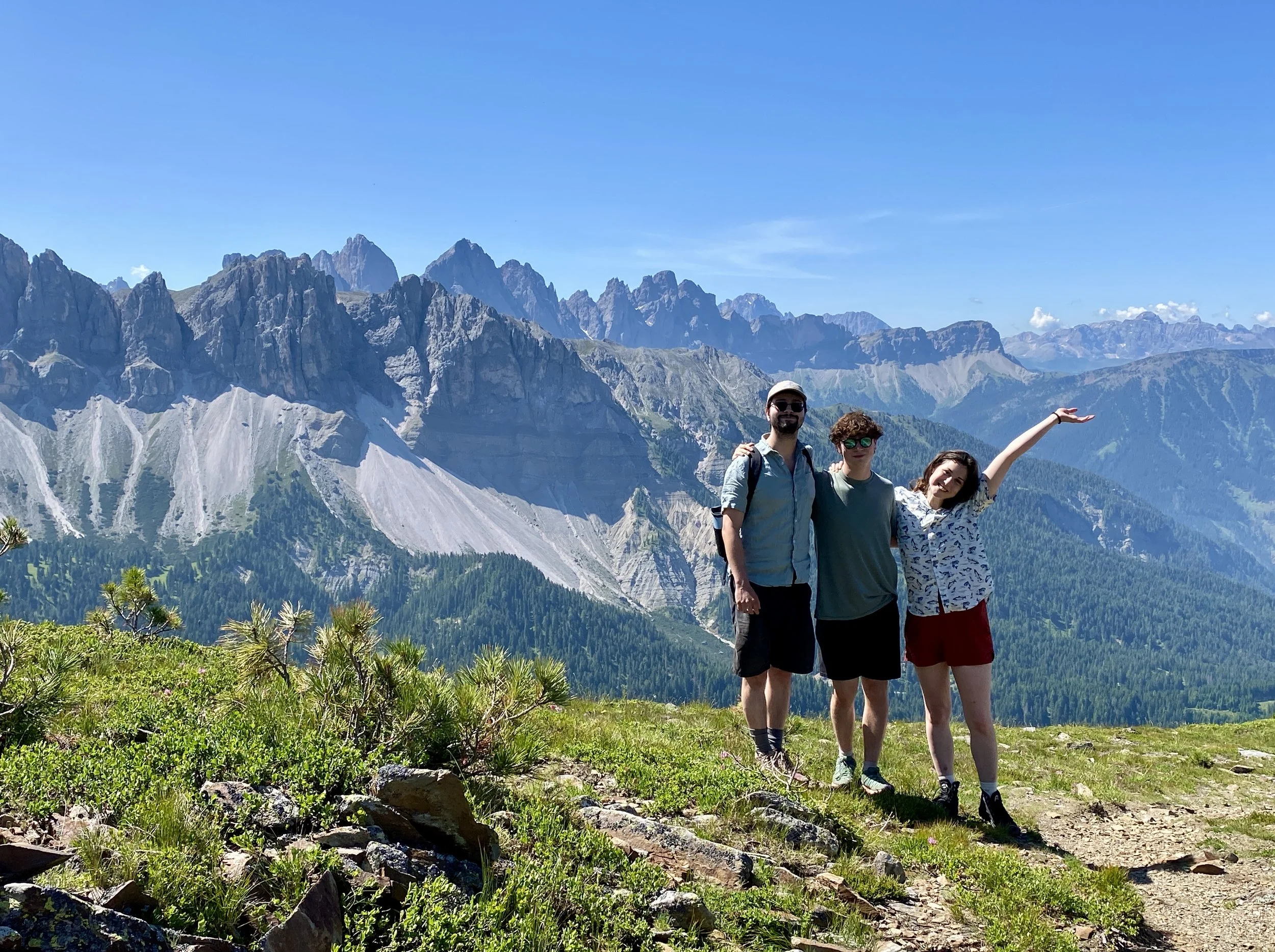
While we’re sharing insights, I also learned that a farmhouse breakfast elevates any view into something sublime. Then again, our view was terrific to begin with.
Traveling With Our Adult Children
Perhaps the most awe-inspiring part of our trip wasn’t the mountains, the flowers, the gondolas, or even the food. It was that we were all there together.
Traveling with adult children is its own miracle. It’s something I learned in Amsterdam last year, but was codified in the Italian alps.
I am awash with gratitude that my three adult children want to travel with us and that we have the capacity to make it happen. I love that in our family stories we’ve now ladled memories of cow variety packs as seen from a gondola, bonding over shots of spruce-tip liquor in egg cups, swooning together over new flavors, and clinking glasses at meals we’ve all pitched in to prepare as cows wandered in from the fields.
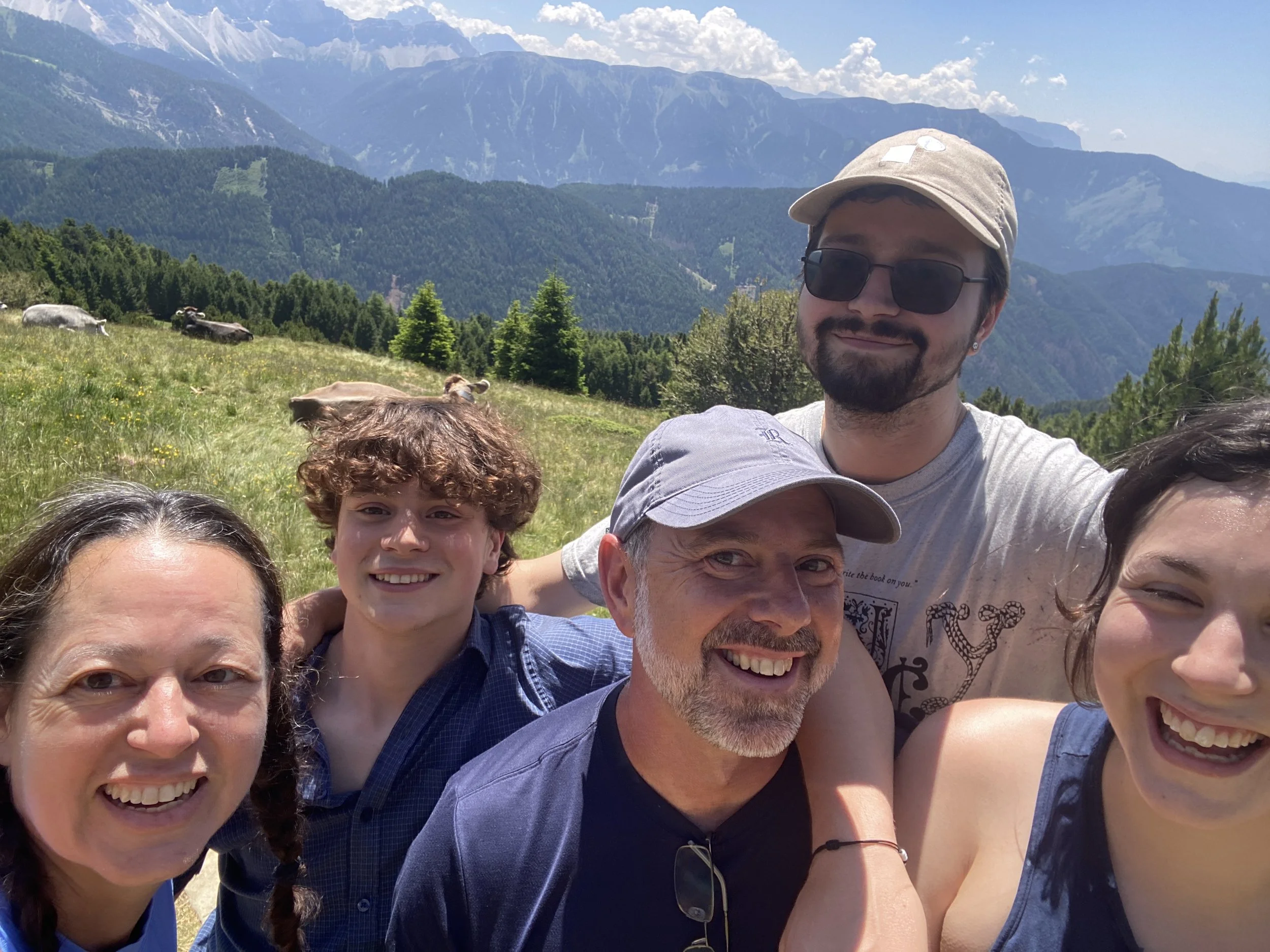
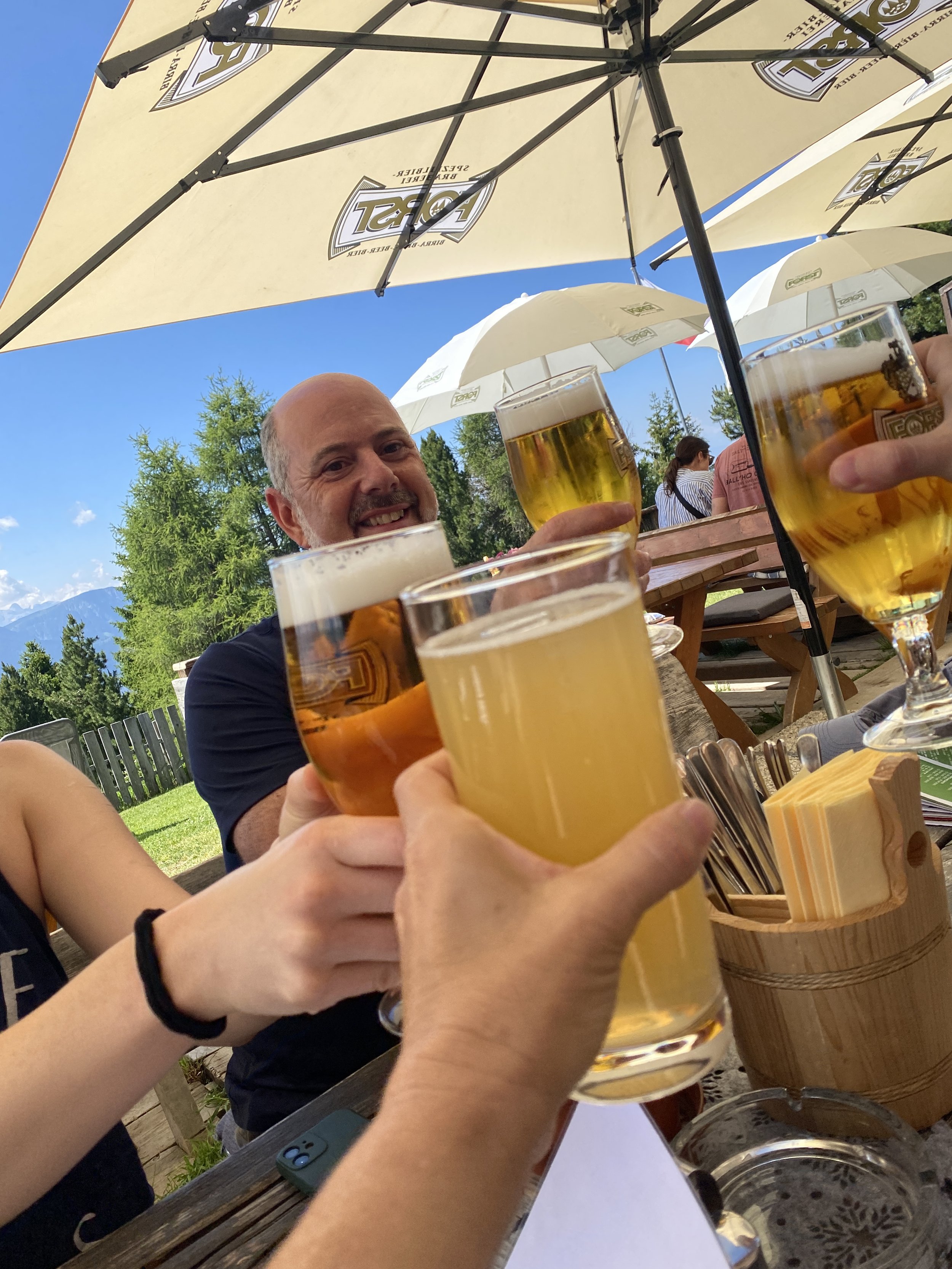
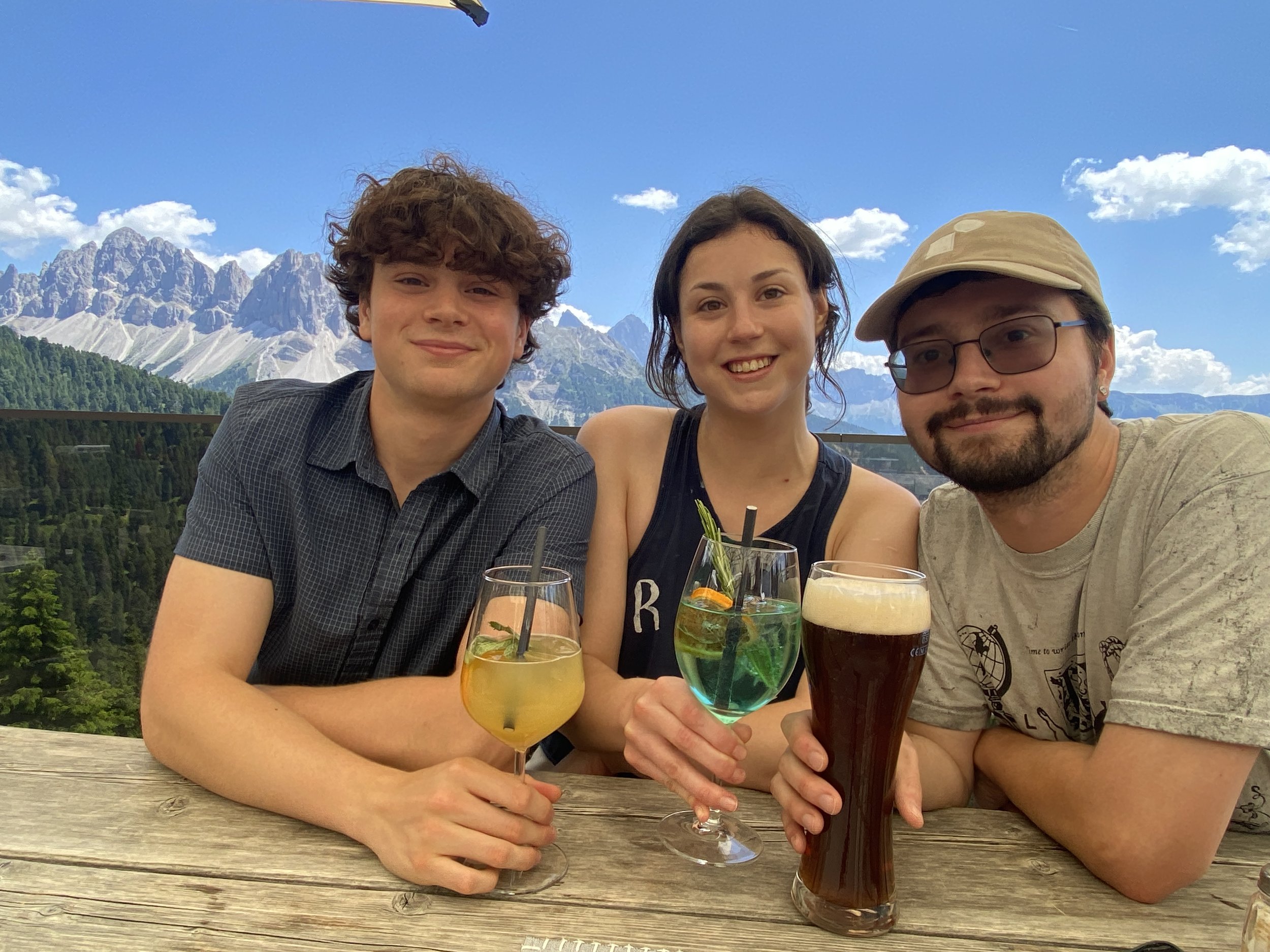
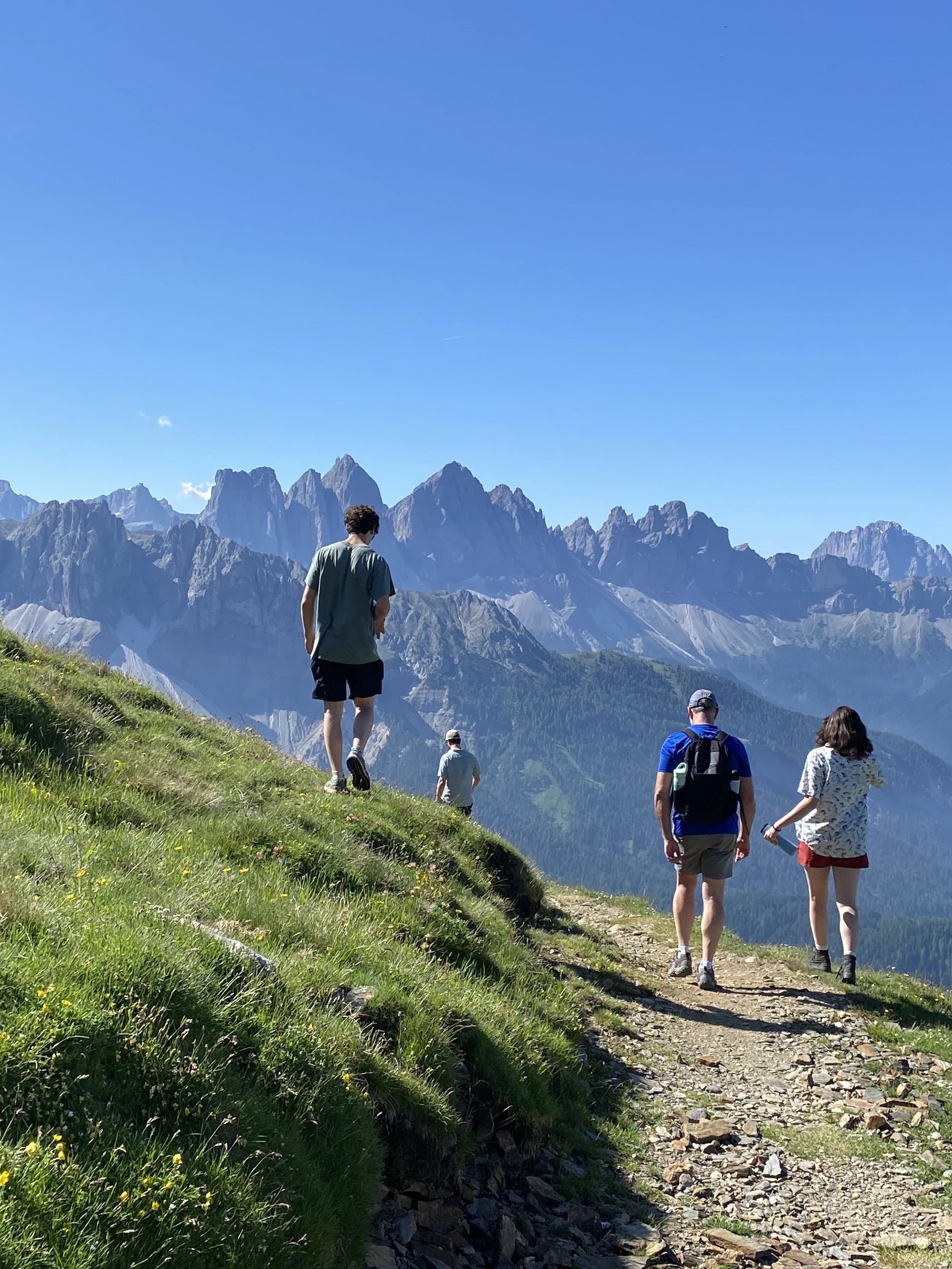
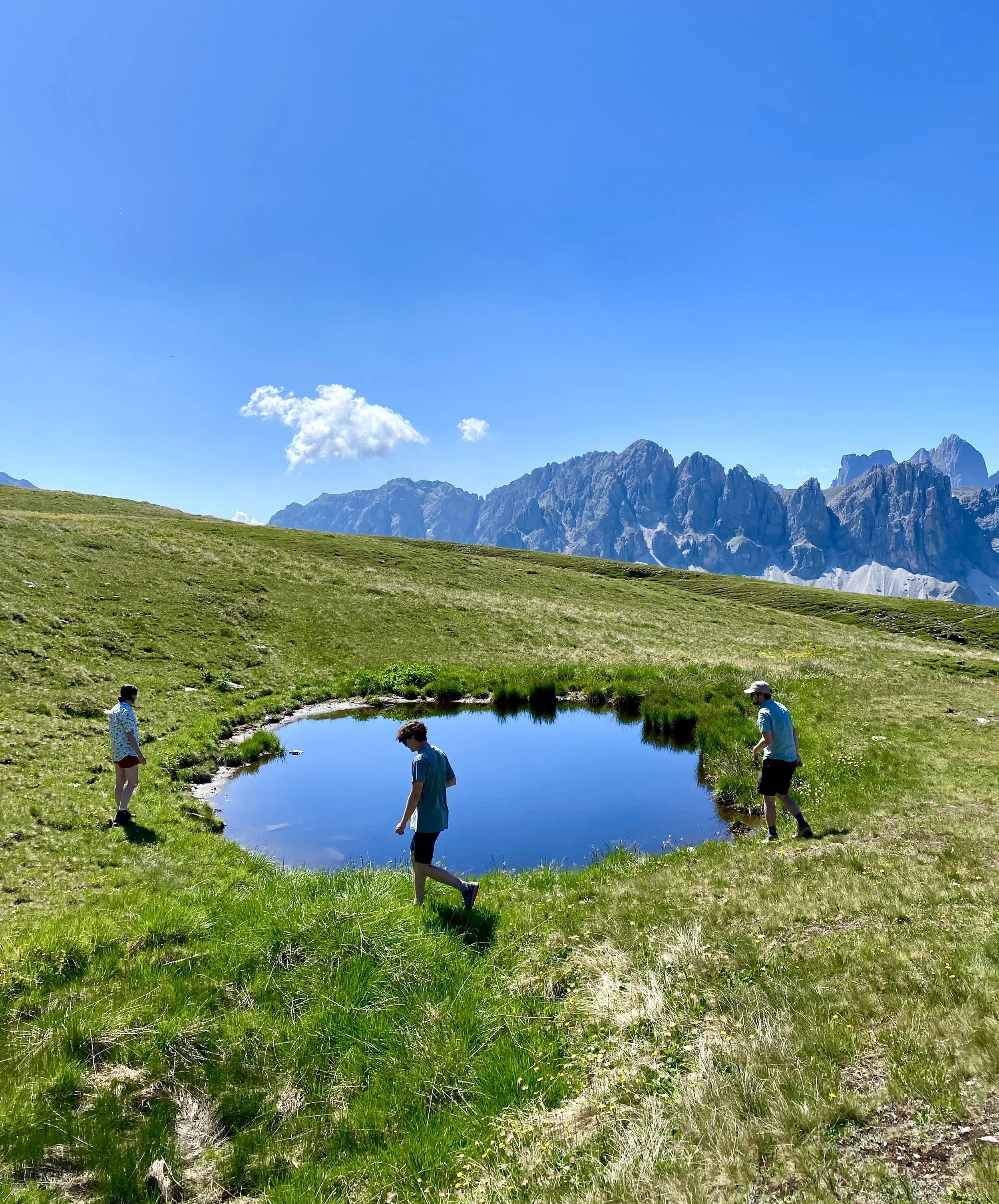
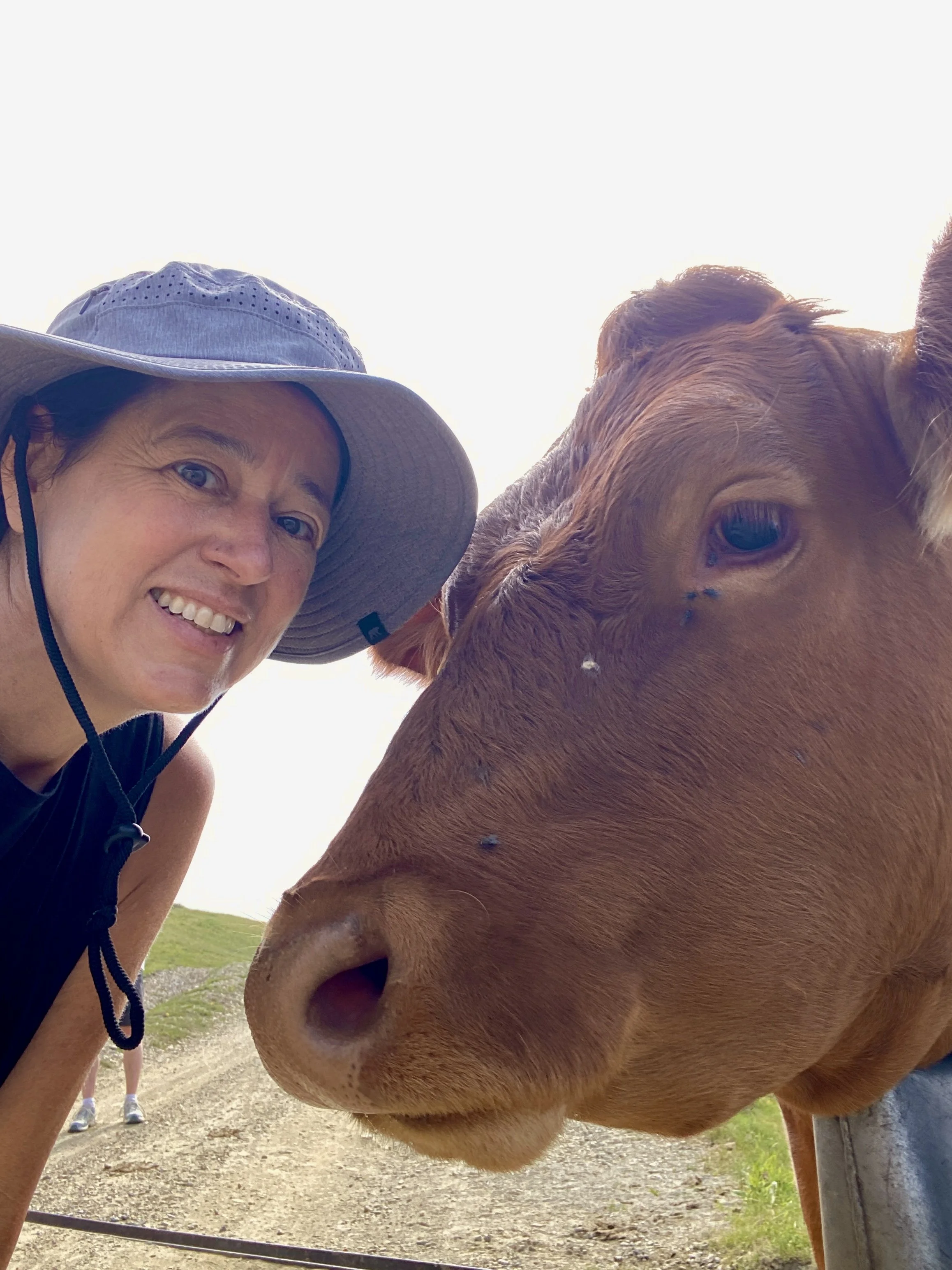
I don’t know how often we’ll get these vacations together, but I know this: I’ll carry the Dolomiti with me always, not just in memory of landscapes and meals, but in the sound of cowbells and the gift of family.
PS. My advice is to make a shared album that everyone drops their photos into. It’s marvelous to see what your children find worthy of photographing and also that way not everyone is taking photos of the same thing, because you know you’ll get all the photos.
Want to discover more off-the-beaten-path Italy? Click the button below and I’ll instantly send you the Italian Hidden Gems Starter Kit, complete with practical information on five destinations most tourists miss. The kit includes when to go, what to eat, where to day trip, and MORE!