
Roots of Puglia
/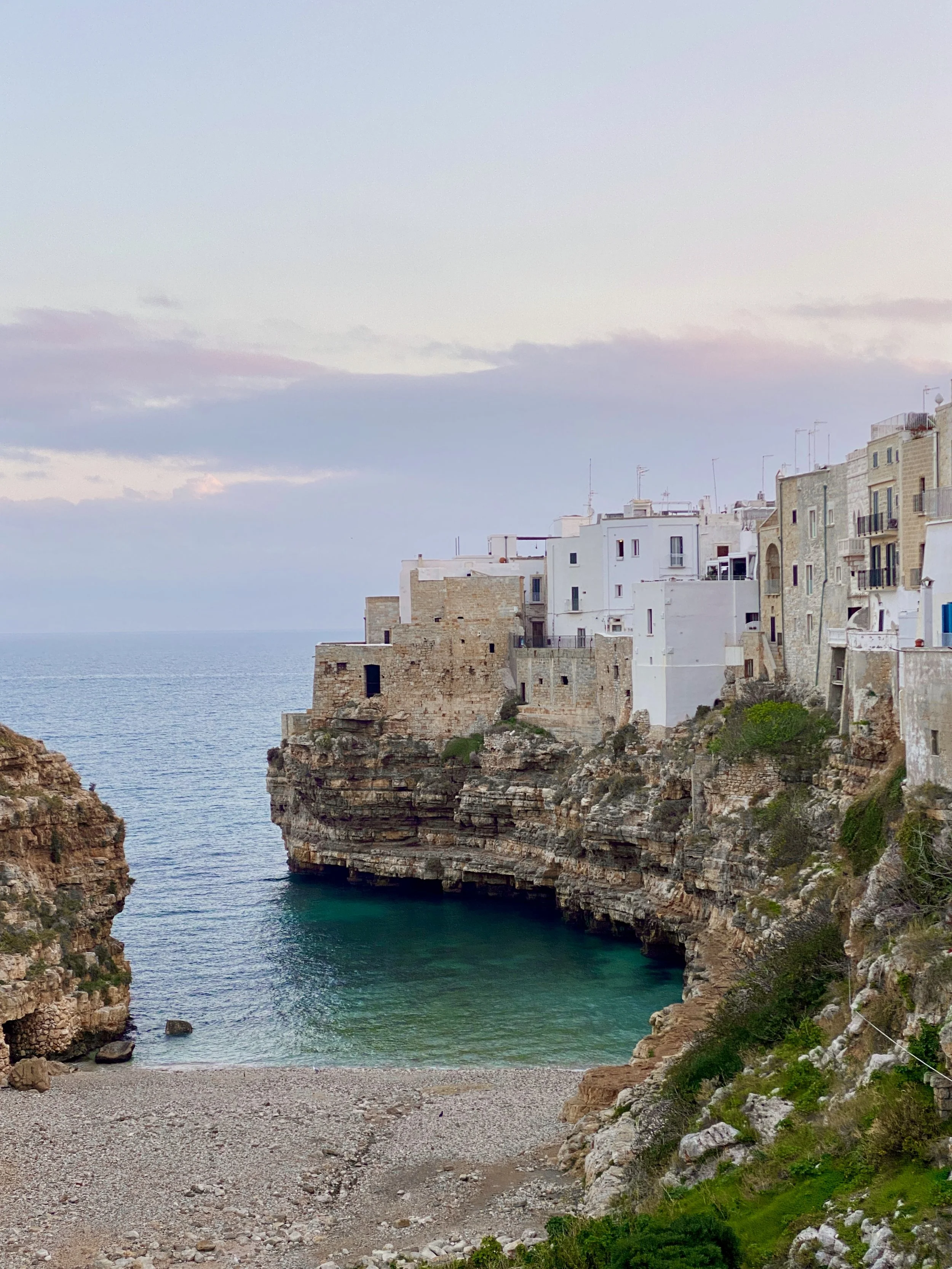
At the word Puglia, you probably think of whitewashed villages. Actually—unless you are a real Italy afficionado—you more likely think, “huh?” I can’t tell you how often I’ve had to explain that Puglia is one of twenty Italian regions, the heel of the proverbial boot. Luckily, I love the charades of it all…it’s nice when your favorite country comes complete with a built-in shoe metaphor.
In any case, those sun-kissed villages are emblematic of Puglia, and honestly, even after a week there in 2020, that was how I continued to consider them.
Well, that and how the notion of seafood turns on its axis when you watch people swim around boulders, prying what looks like barnacles off to slurp them down for lunch; that is, when they aren’t standing waist-deep in the water, casting lines hooked with bread to catch little fish to bring home for supper (click here for more on how Puglia reframed how I think about fresh seafood).
It wasn’t until last month’s trip to Puglia with Max Brunelli of Ciao Andiamo that I began to glean that the real roots of Puglia lie in the soil. Underground. That’s where the magic starts. As tourists, we trip over the topsoil, ignoring the dusting around our toes, but to really understand the soul of this region, you need to dig a little deeper—to unearth the ceramics, the olive traditions, and the viniculture of Puglia.
Roots of Puglia
Ceramics of Puglia
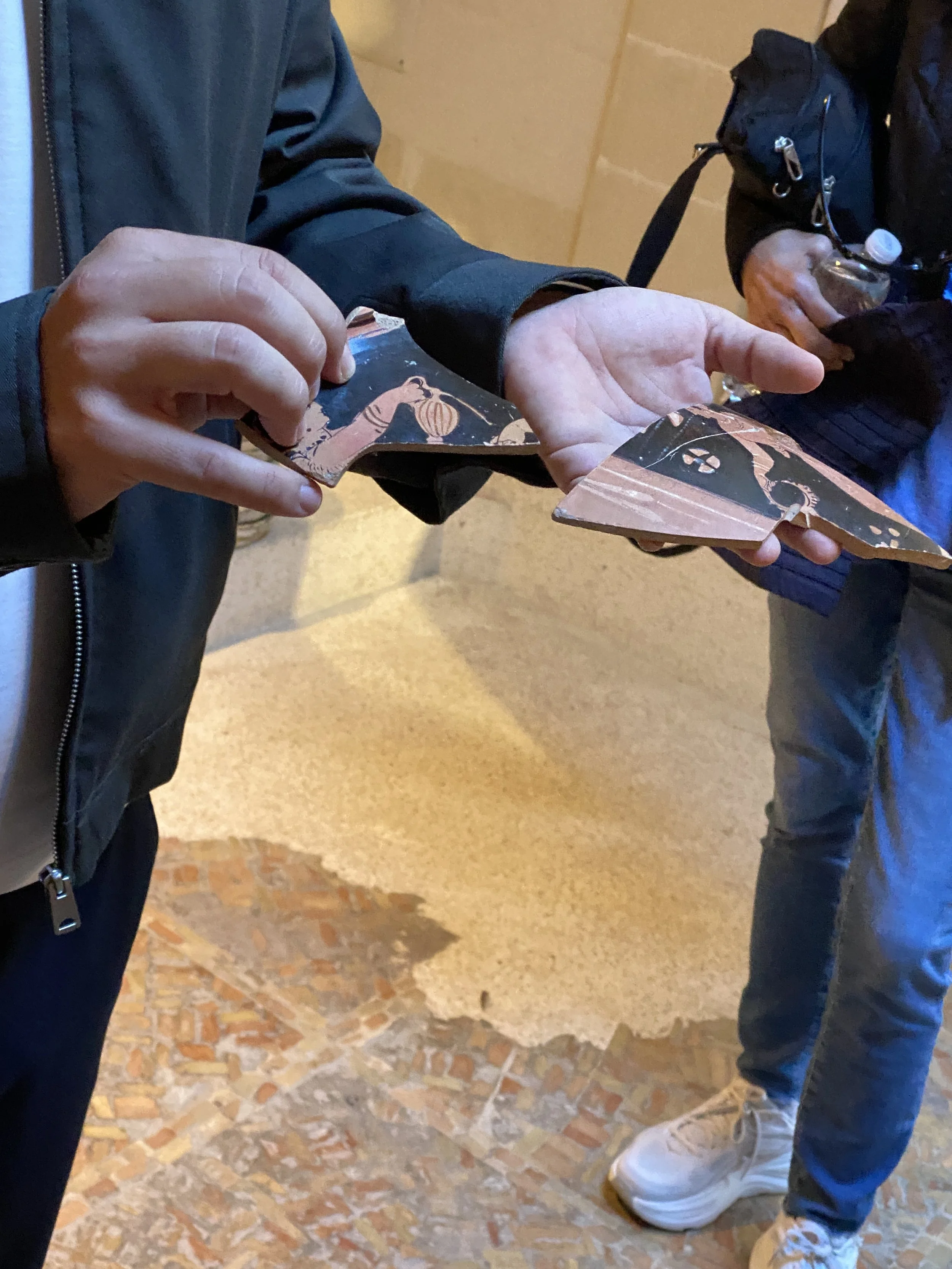
On our way between Matera and our Pugliese home base of Polignano a Mare, we stopped in Grottaglie.
When Max and I planned the itinerary for our Bookclub with a View, I was specific about wanting to stop and visit a friend of his that he’d told me about when he and his wife Cristiana came to visit us in Charlottesville. Over pimento-cheese spread and pickled okra (I’m always eager to share the flavors of my home), he told us the story of a guy out digging in his garden in Grottaglie when he discovered ancient pottery.
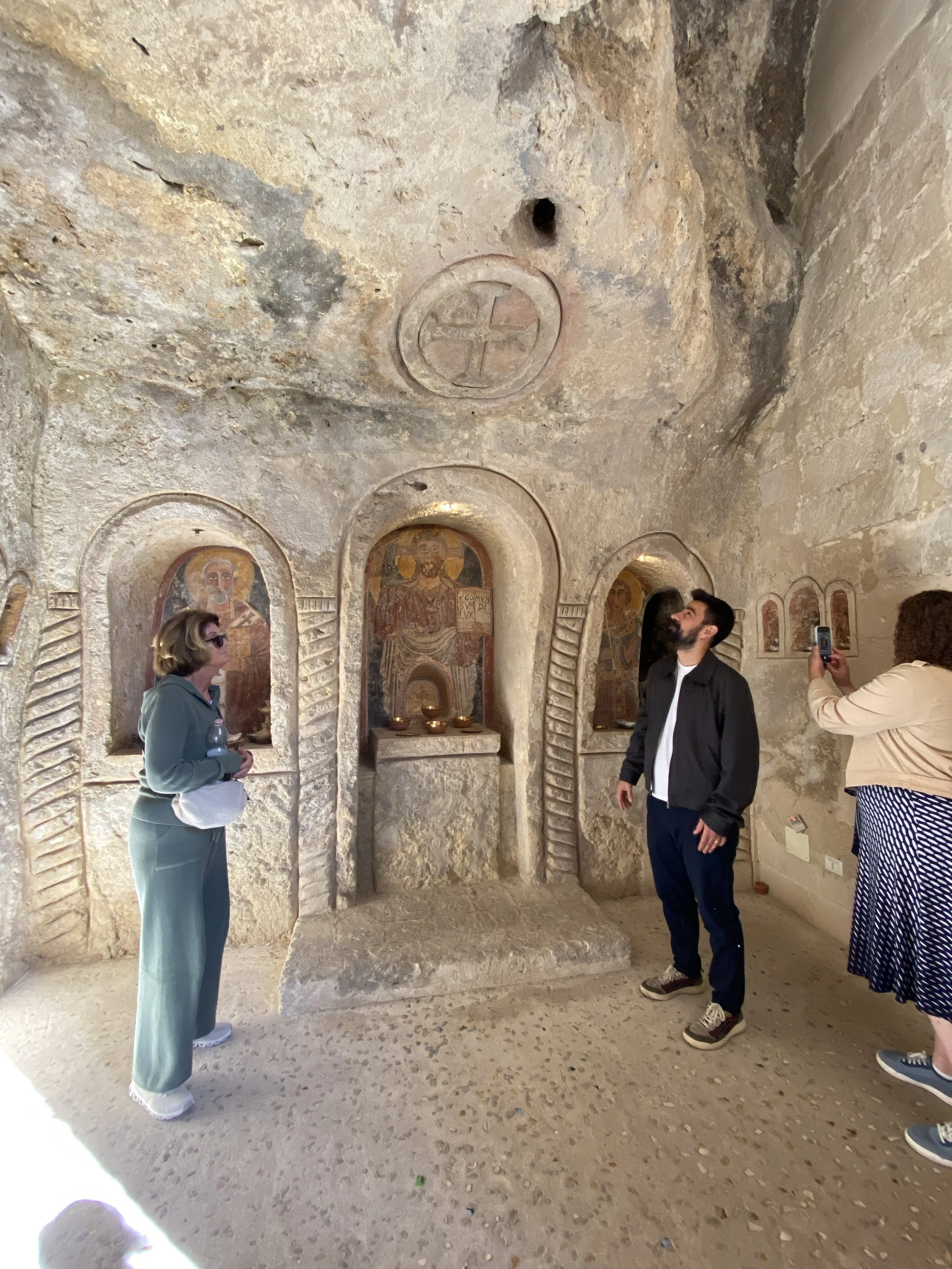
My imagination caught. I nursed the image of this—a common occurrence in Italy, where a sentence that begins, “He was out digging in his garden…” leads to all sorts of MadLibs endings. You can fill in the blank with:
“discovered mosaics of an ancient Roman bath,”
“uncovered an Etruscan crypt,” or
“found remnants of the world’s first air fryer.”
Okay I’m kidding about that last one. Mostly. With Italy, you never know.
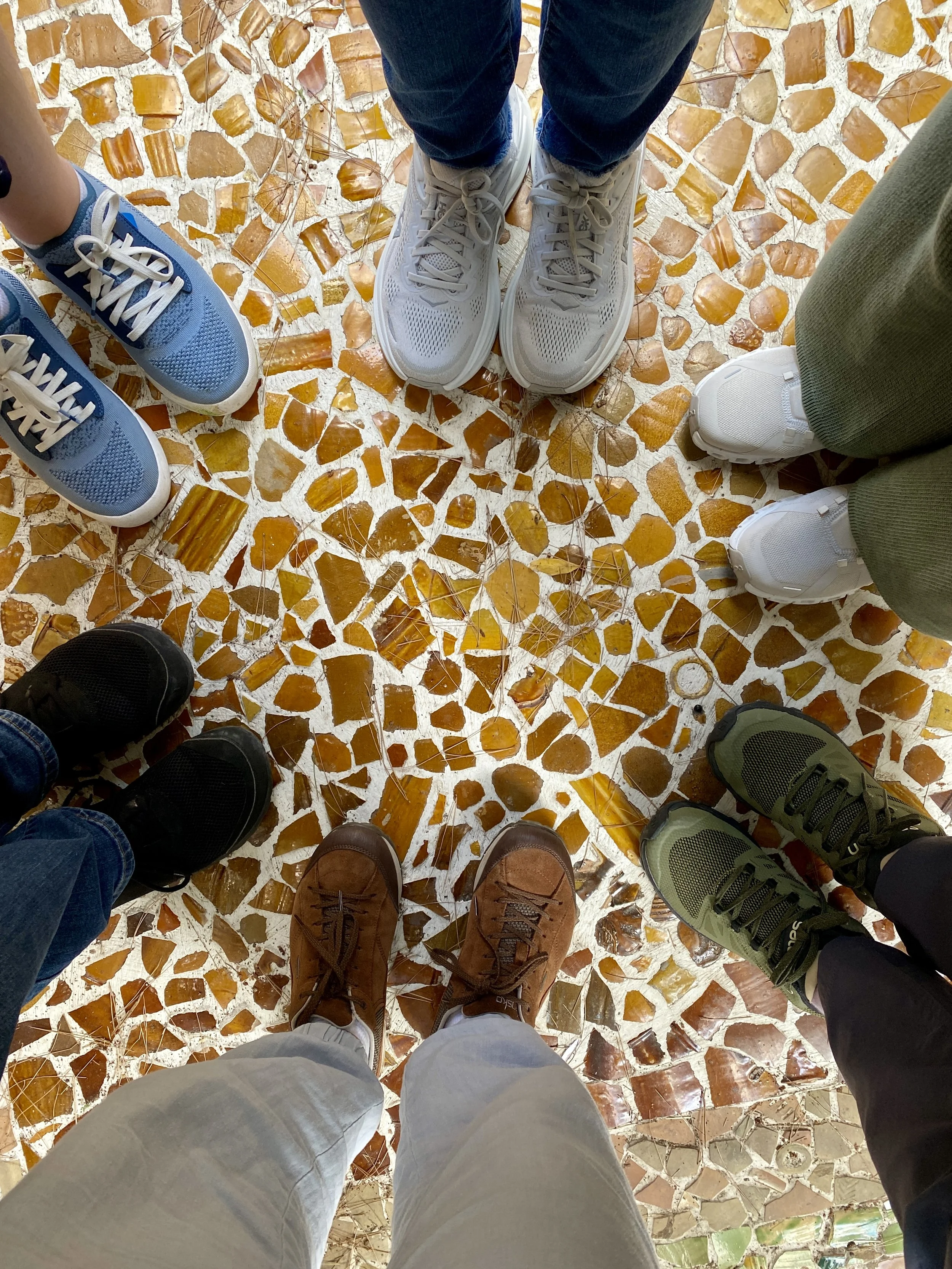
Anyway, we didn’t tell our participants about the history of this ceramics studio, and delighted in their eyes—enormous as we filed down stone stairs—to discover caves with a church dating from the 1200s, complete with a single nave, three apses, and frescoes. Around the walls, a “pharmacy” which once held the remedies of monks, and a Holy Water dispenser carved right out of solid rock. Antiquities such as cups with knightly emblems, coins, and Templar crosses—all dating back as far as the 9th century—were tucked into nooks throughout the space. What a thrill to wander into caves straight out of an Indiana Jones movie, with hidden shrines carved into the seashell-laced tufa and little niches that once held oil lamps for potters centuries ago.
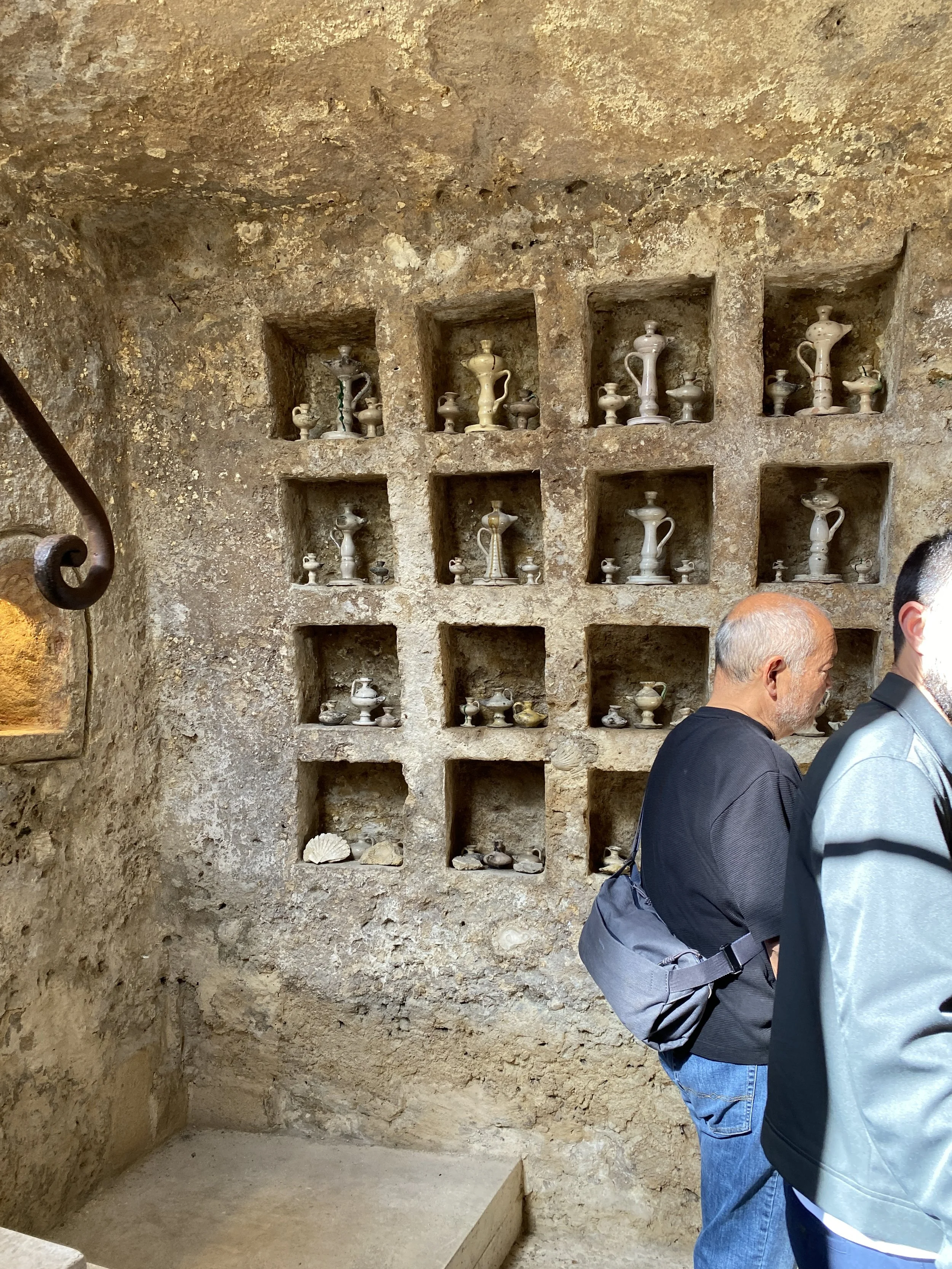
If walls could talk, these would gossip.
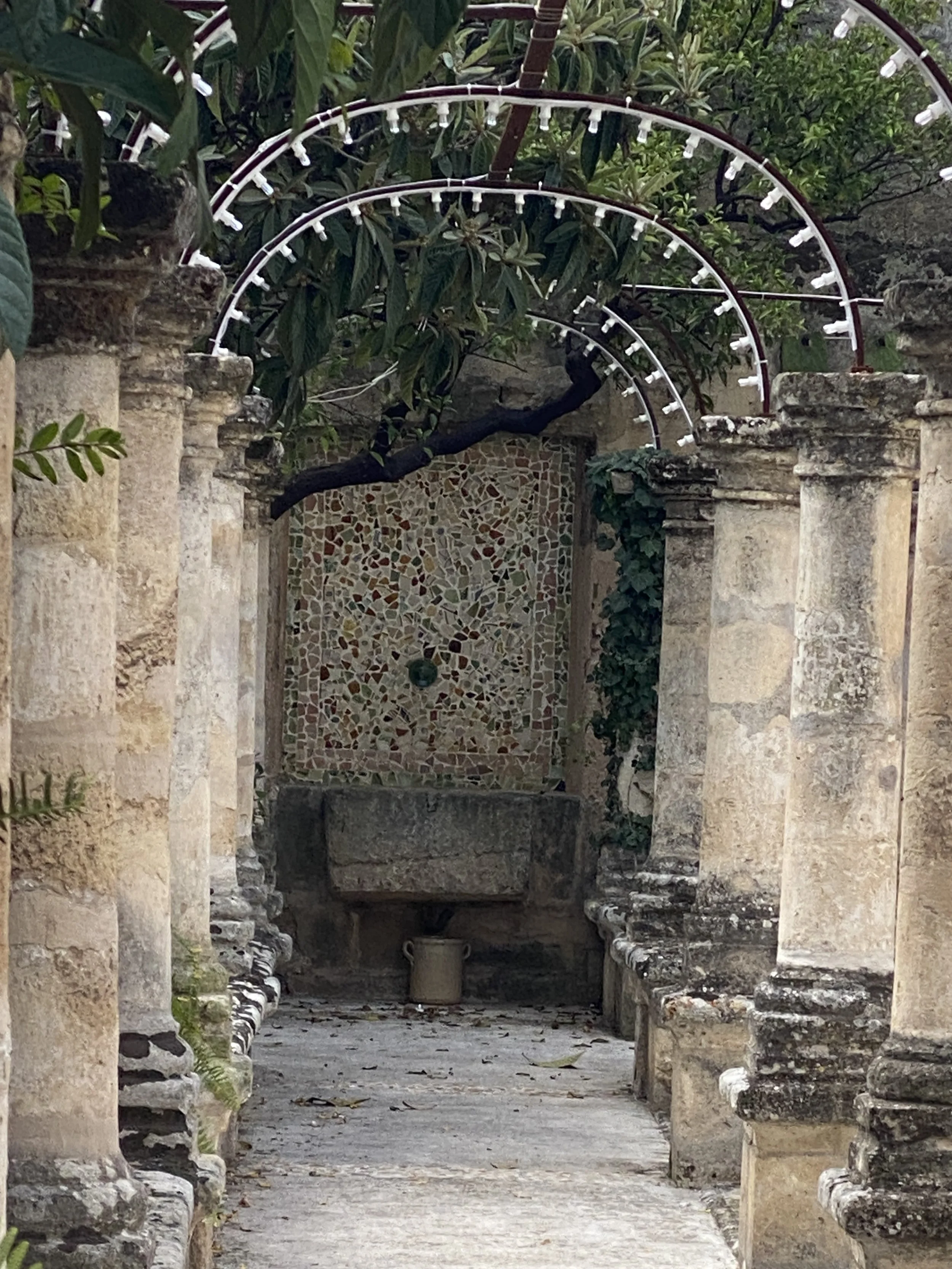
We emerged into the ancient garden, which had been cultivated since the 19th century. Amphorae and jars peeked from under pomegranate trees and majestic prickly pears, while a colonnade offered a discreet spot for ladies of the time to entertain their friends without prying eyes. The combination of history, horticulture, and whimsy made it impossible not to be enchanted.
From the house, we walked to the family’s ceramics studio. As we walked, the tour continued and we learned that Grottaglie has produced ceramics since at least the Middle Ages, when the clay-rich soil, endless caves for cooling, and abundant water made it a natural hub. The tradition stuck: for centuries families passed down both their craft and their kiln secrets like heirloom recipes.
Grottaglie hangs onto its long tradition of ceramics by mandating that other than one bar and one restaurant, all other commerce in the Ceramics District must be ceramics. As families grow, the members share the studio, allowing one storefront to hold various styles—vibrant majolica, rustic water jugs, contemporary sculptural forms, all cheek-by-jowl.
As a person who loves ceramics as art that is handled daily, I thrilled to all the shops: bliss is walking past rows of hand-shaped bowls still warm from the kiln, knowing someone’s dinner will someday be held in them. Even better to wonder how many shards of pottery lay in the earth under my feet.
Wine of Puglia
When we lived in Spello, Keith always returned home from the weekly shopping with a bottle of primitivo, a wine—and also a grape—from Puglia.
Primitivo is often called the Italian cousin of Zinfandel; DNA confirms they’re basically siblings separated at birth, though Primitivo tends to be bolder, darker, and—if we’re being honest—a little moodier. The bottle Keith bought was a few euros, which may suggest poor quality, but I am here to tell you it was fabulous, just not yet fashionable enough to drive up the price. Pro-tip, seek it out at a wine store, you’ll see what I mean.
Frankly, Primitivo has been a bit of mystery to me, which is why I wanted Max to include a trip to a Pugliese winery on our itinerary. I knew from our Travel Journaling course in Liguria that Max has a knack for finding interesting wineries.
The winery we visited in Puglia was the perfect blend of rustic and refined: vineyards unfurling to meet us, two Bernese Mountain Dogs bounding toward us as if we were long-lost cousins, and tour part wine history and part place history as the winery has been operating for longer than I knew Puglia had been making wine.
Primitivo, we learned, thrives in heat and limestone; its roots practically burrow into prehistory, tapping minerals from an ancient seabed.
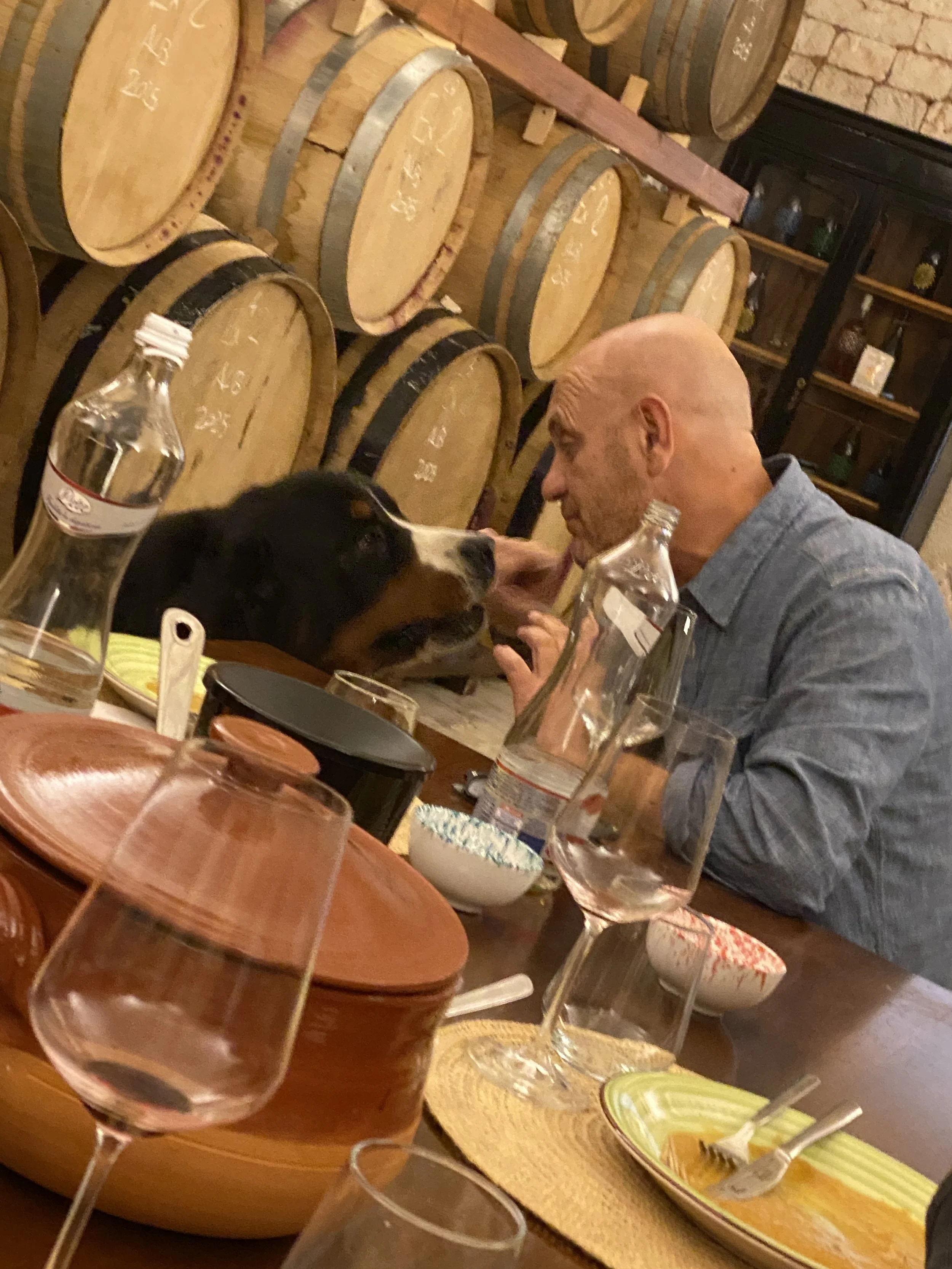
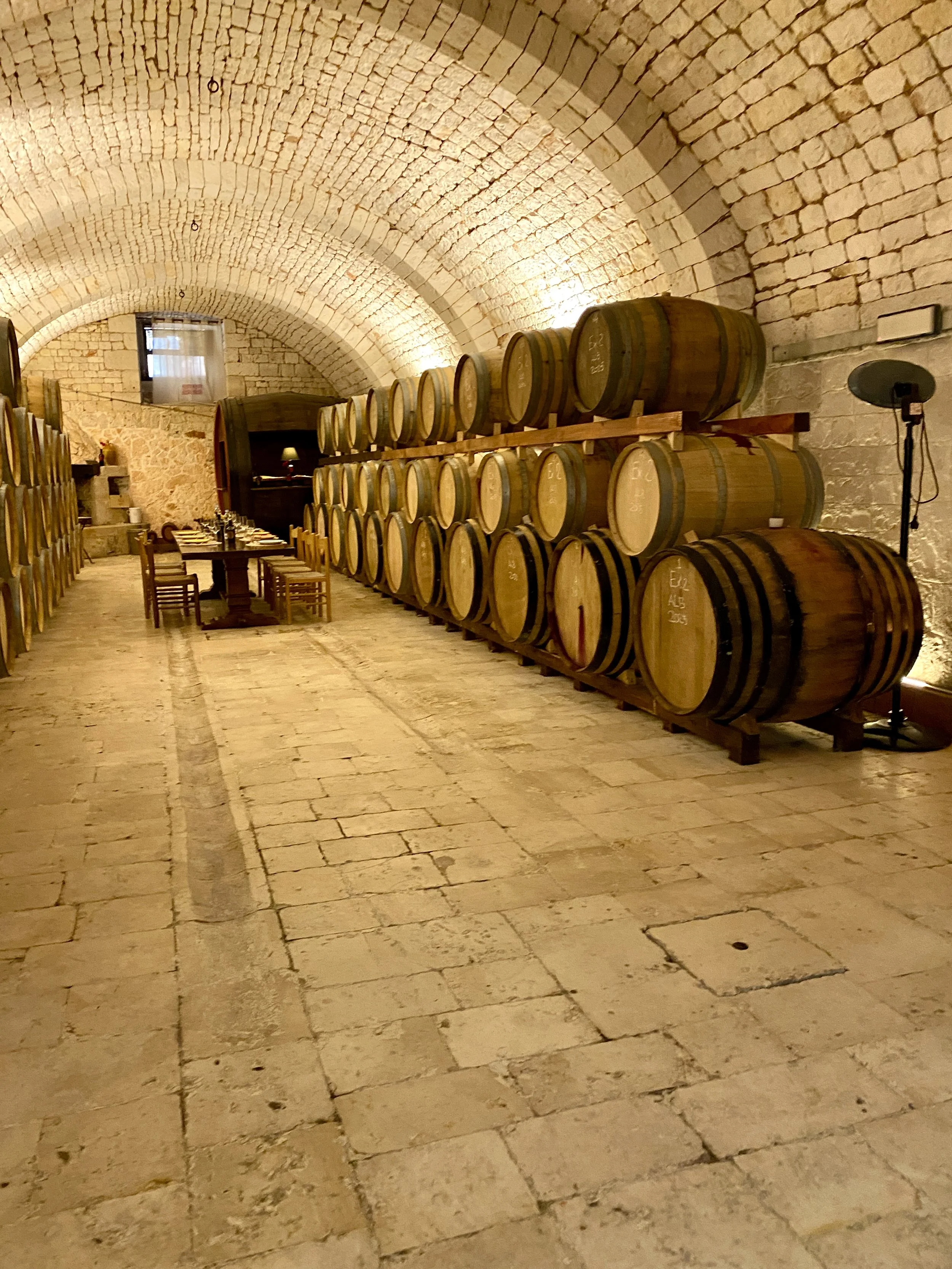
The tour ended with a trip to the cellar—one room where hand-painted labels dried on wooden racks, another that used to be a disco in the 1970s (mirror ball still faintly glinting), and finally a long table set for lunch.
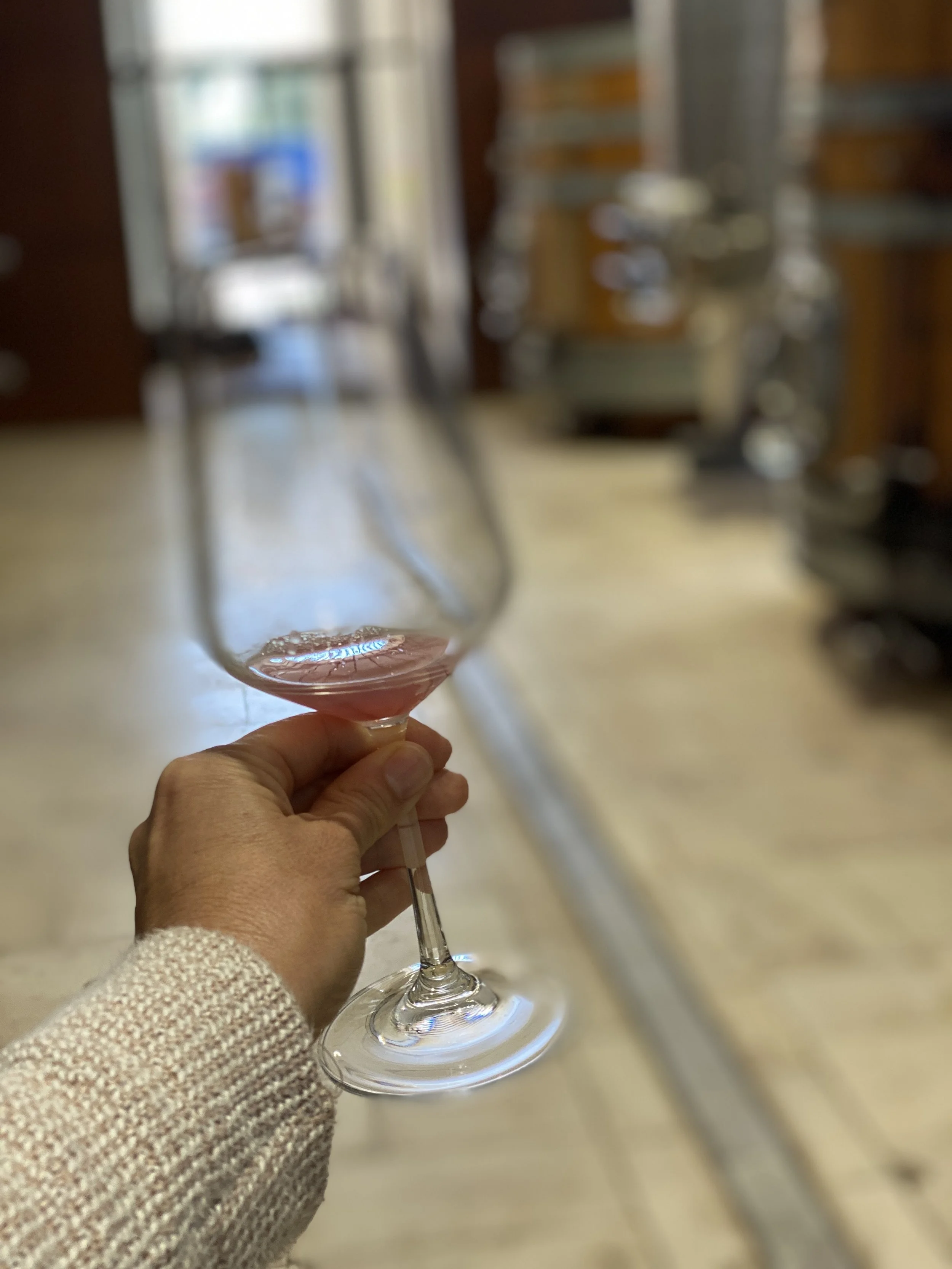
Each course was paired with a wine: an unusually crisp white with burrata, a bright rosato with friselle (a Pugliese staple—round, crisp bread topped with seasoned tomatoes), a velvety Primitivo with rolls of beef in tomato sauce.
At the close of the meal, many of my fellow book lovers wandered upstairs to buy wine and take in the view.
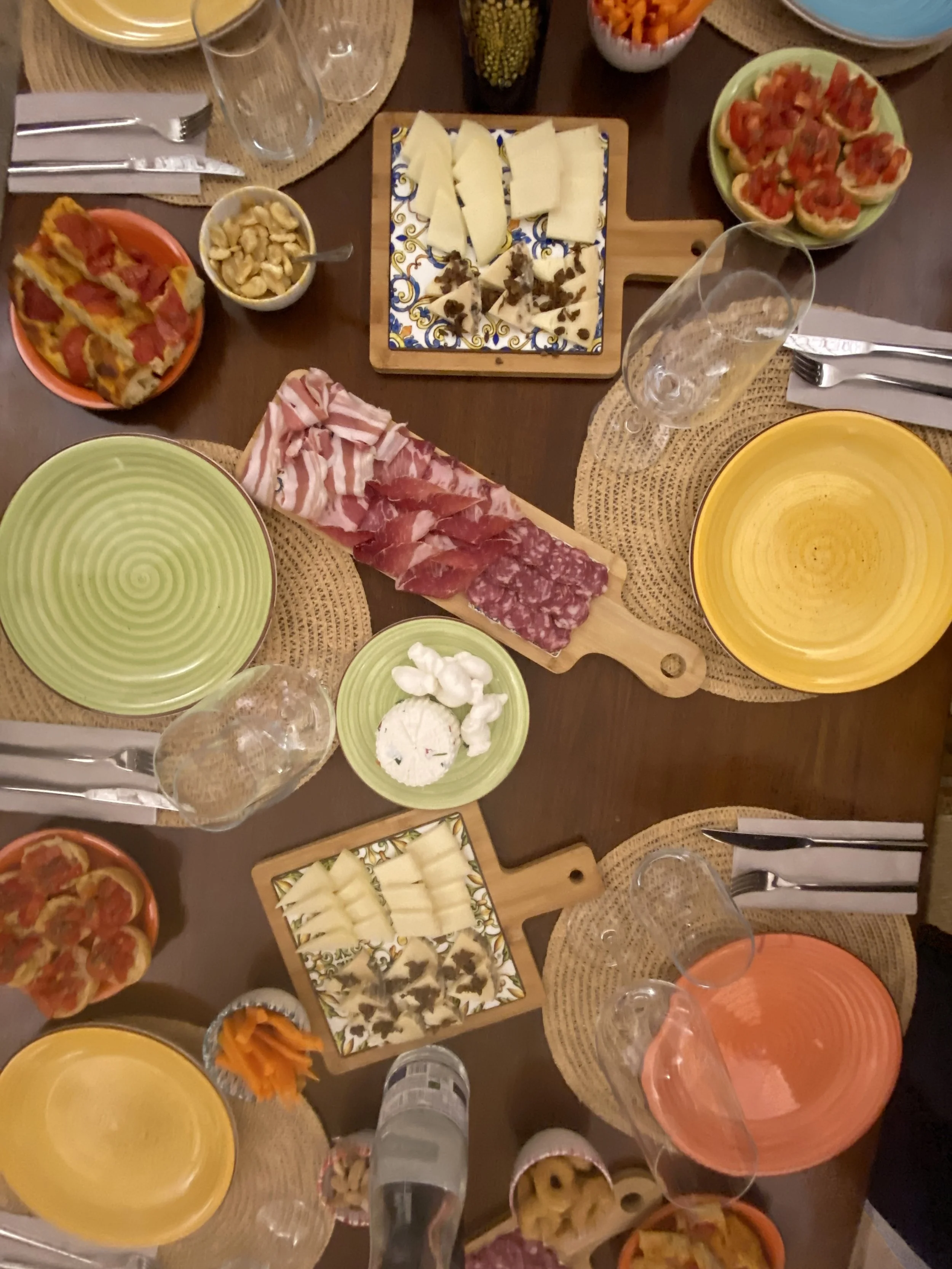
As for me, I had no compunctions to move from our snug underground table.
With the fire crackling in the corner, the Bernese mountain dog snoring under the table, and a basket of warm chestnuts to crack open and enjoy with the last of the wine, I honestly felt I could sit there forever—talking and sharing, wrapped in the same deep, ancient layers as the roots of the primitivo vines.
Olive Oil of Puglia
Now, as you read read this next section, please remember: I lived in Umbria for two years and have loved her for more than a decade.
All to say—I know my way around an olive tree. I have clear ideas about what makes for good oil. I have fixed notions of how olive trees’ delicate forms belie their tough nature. (One of the most commonly viewed pages on my site is by my son, who when he was “unschooling” in Umbria wrote an essay on why olive trees live so long. It may be hard to inspire a thirteen-year-old boy, but turns out a thirteen-year-old boy surrounded by olive groves can get pretty inspired.)
Puglia upended it all.
There are 61 million olive trees in Puglia, Max tells me. More than people in Italy. Which means as you’re cresting a hill and soaking in the landscape, it’s easy to forgive yourself for being unsure if that brush of blue-green across the sky is the sea or swaths of olive trees.
Spoiler alert: This being Puglia, it’s probably both.
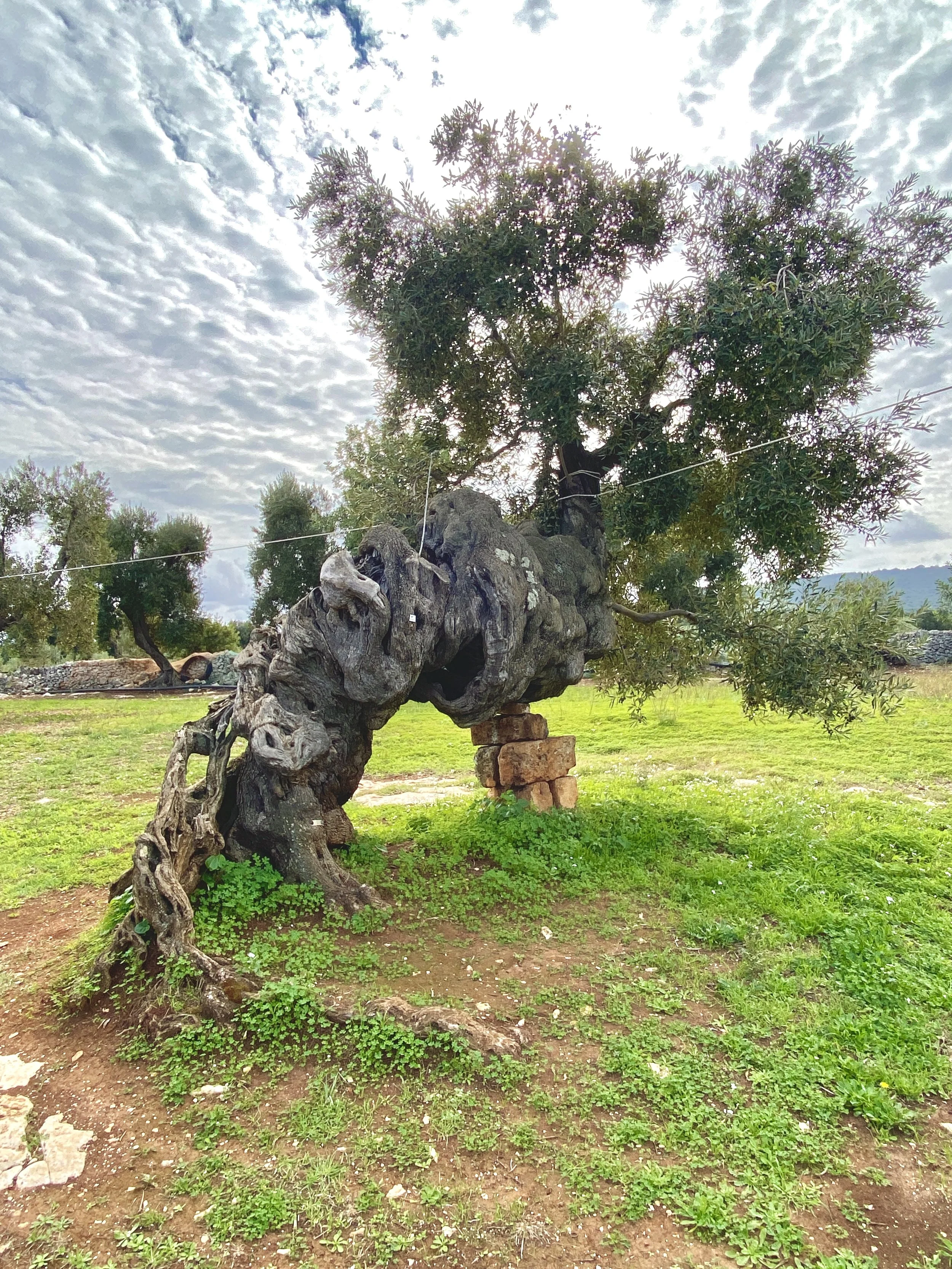
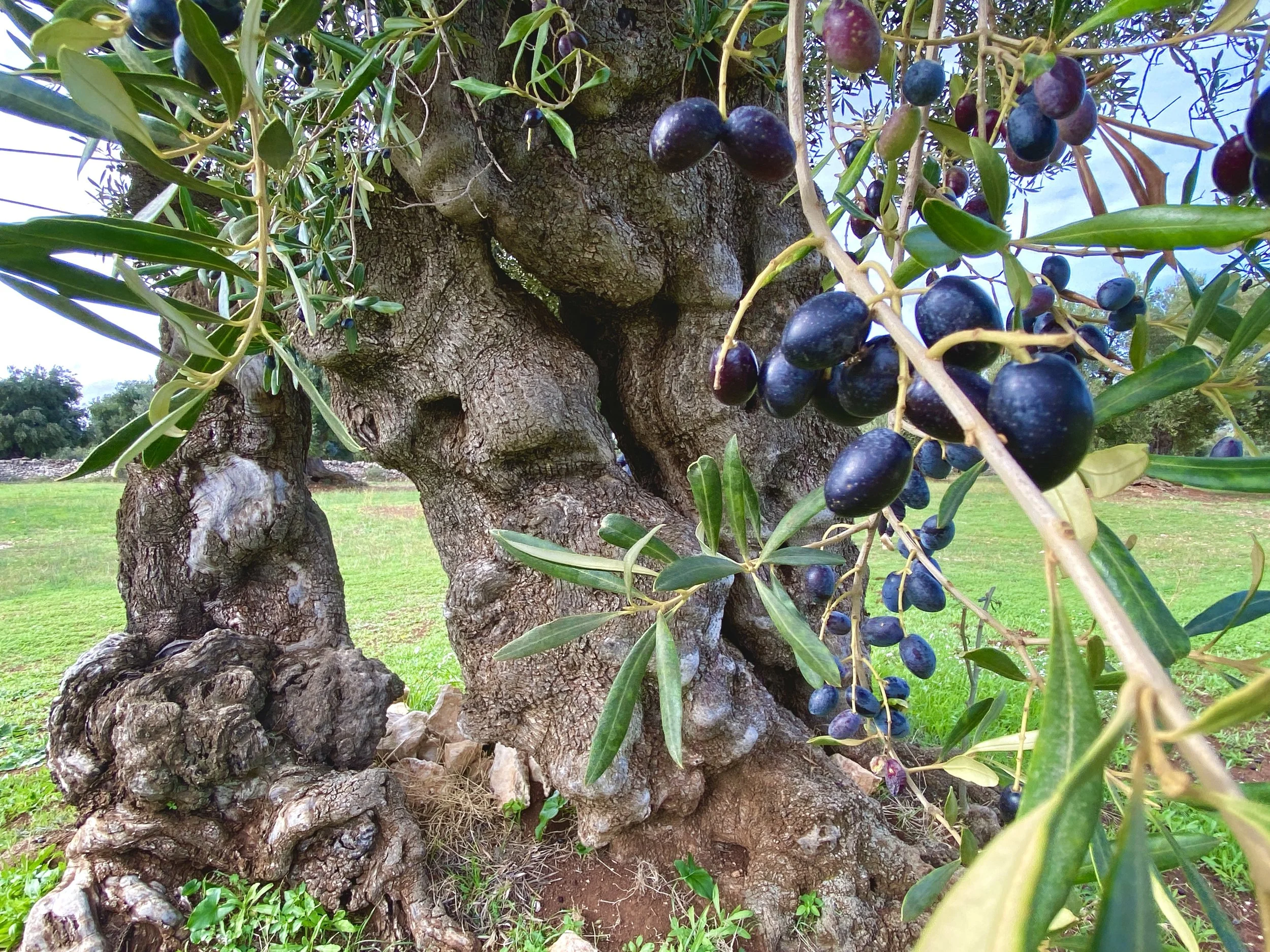
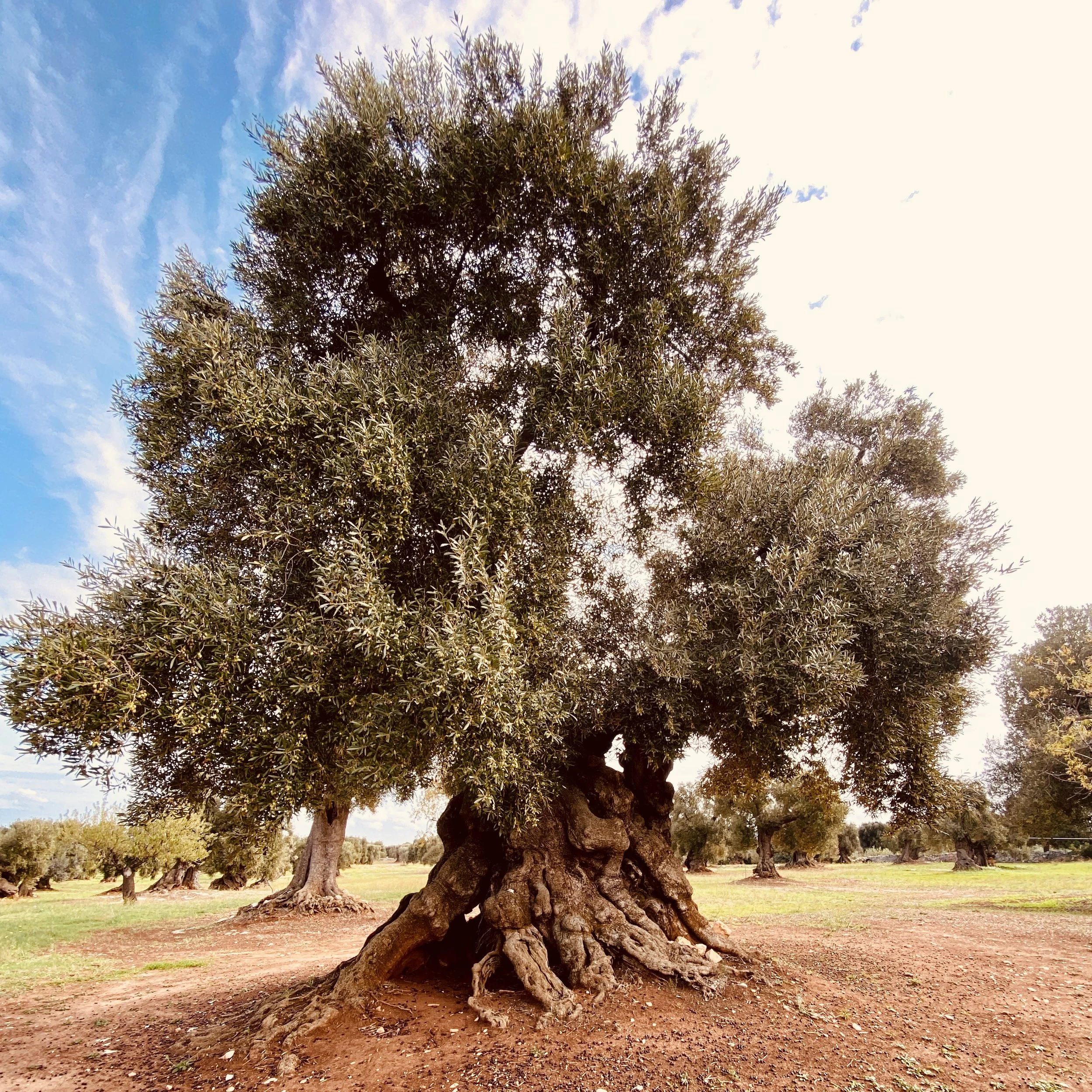
Even knowing all that, it’s still hard not to be rocked back on your proverbial heels when you begin winding your way through the countryside and spot a tableau of olive trees that for all the world look like they’re enacting a Scottish fairy tale—dark, mystical trees, hulking and heaving over the grass. Princesses lifting their skirts. An ogre swinging his belly. Crones guarding their secrets. Even a Nessie, coiled and ready to spring.
I blinked. No, we are not in Umbria anymore.
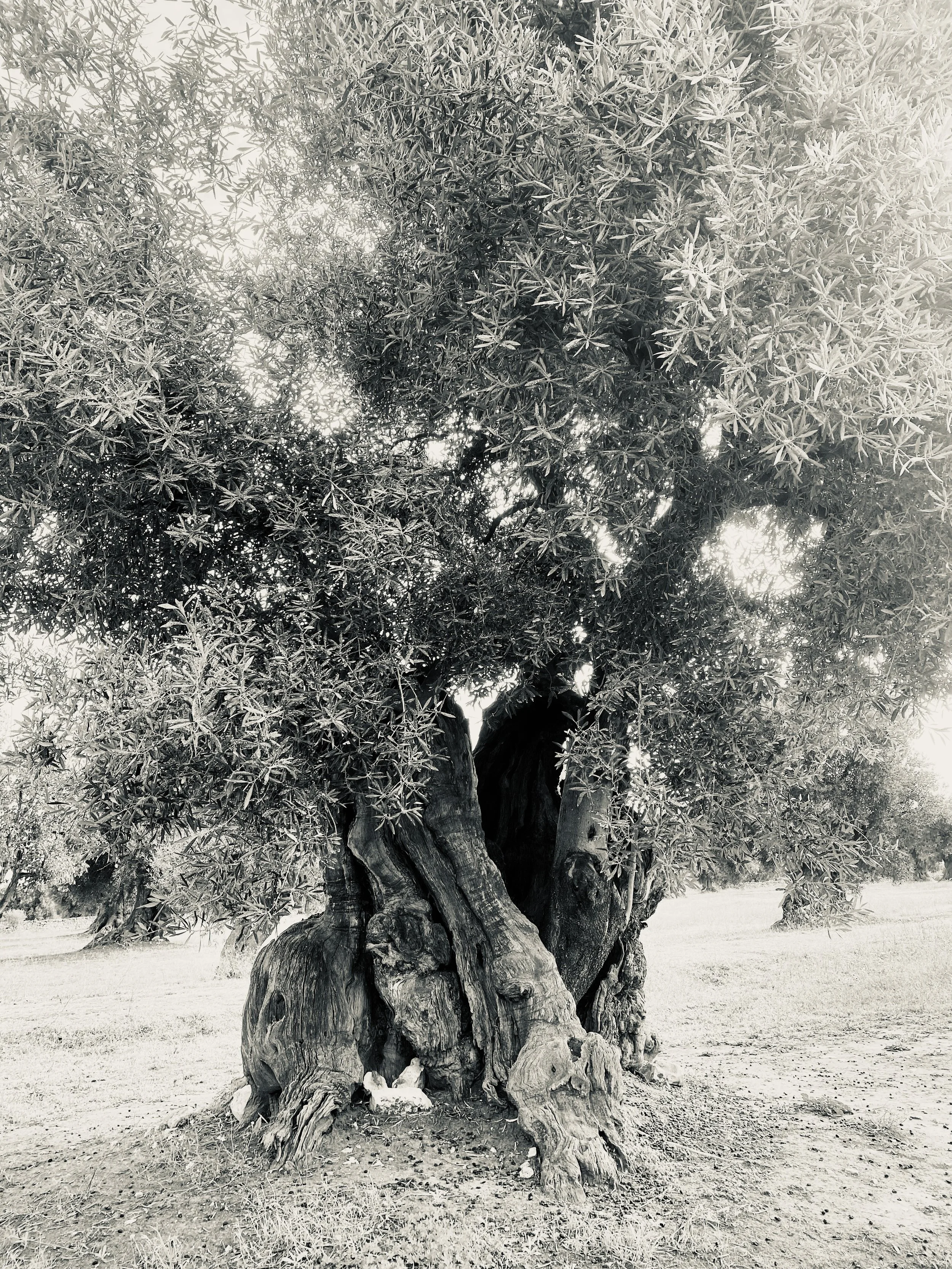
I begged Max to pull over. I needed to skip through these trees. I wanted to hold hands with their outstretched branches, to twirl under their canopy. Those olive trees turned this 53-year-old woman into a pigtailed girl, desperate to get outside after too many days of rain.
Max did not pull over because that would be silly.
But he did promise me I’d get all the olive trees I needed at the masseria.
A masseria is another uniquely Pugliese enterprise—former fortified farmhouse complexes with watchtowers to guard against Saracen pirates (somehow Italy finds a way to be charming and romantic even in battle). Many have morphed into farms, restaurants, or agriturismos (agriturismos are Italian farm-stays that allow visitors to weave their lives into the agricultural heartbeat of Italy, you can read my post about them here and discover if you want to add this level of Italy to your next vacation).
I’d been to a masseria for lunch in 2020, a memorable experience even if the food was only so-so. The benefit of traveling with a professional like Max is that he knows how to scout the really excellent places.
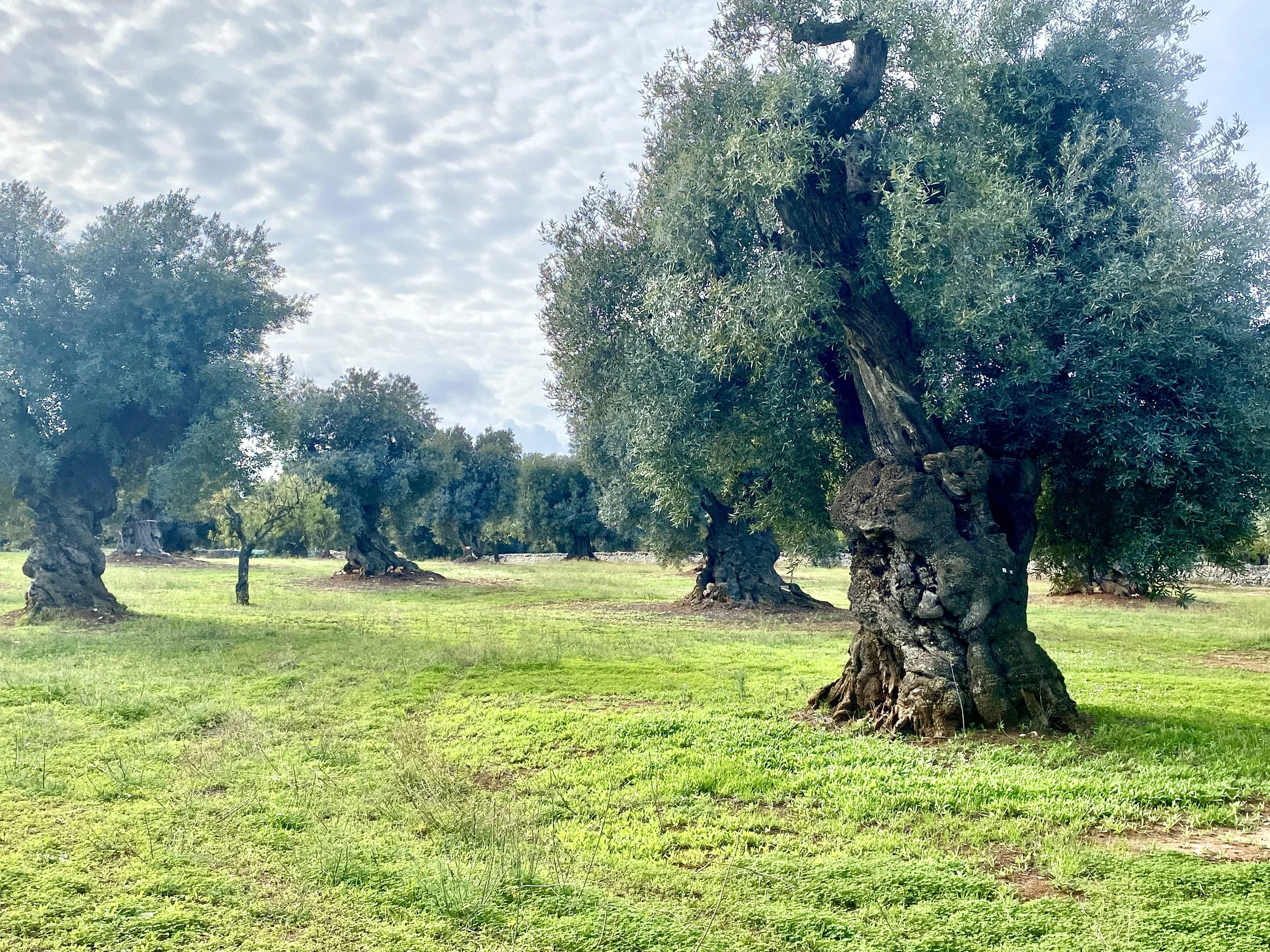
For example—the masseria we visited as part of our Book Club with a View has served as an olive oil mill for thousands of years.
No, that’s not hyperbole.
I met olive trees two and three thousand years old. So old that 800 of the 1000 trees are registered national monuments, which means the owner of the land can harvest the olives, but cannot make decisions about the trees without permission. The trees literally have metal plates affixed to their trunks—GPS trackers so they aren’t spirited away in the night. (Yes, olive-tree theft is a real thing. Humans gonna human.)
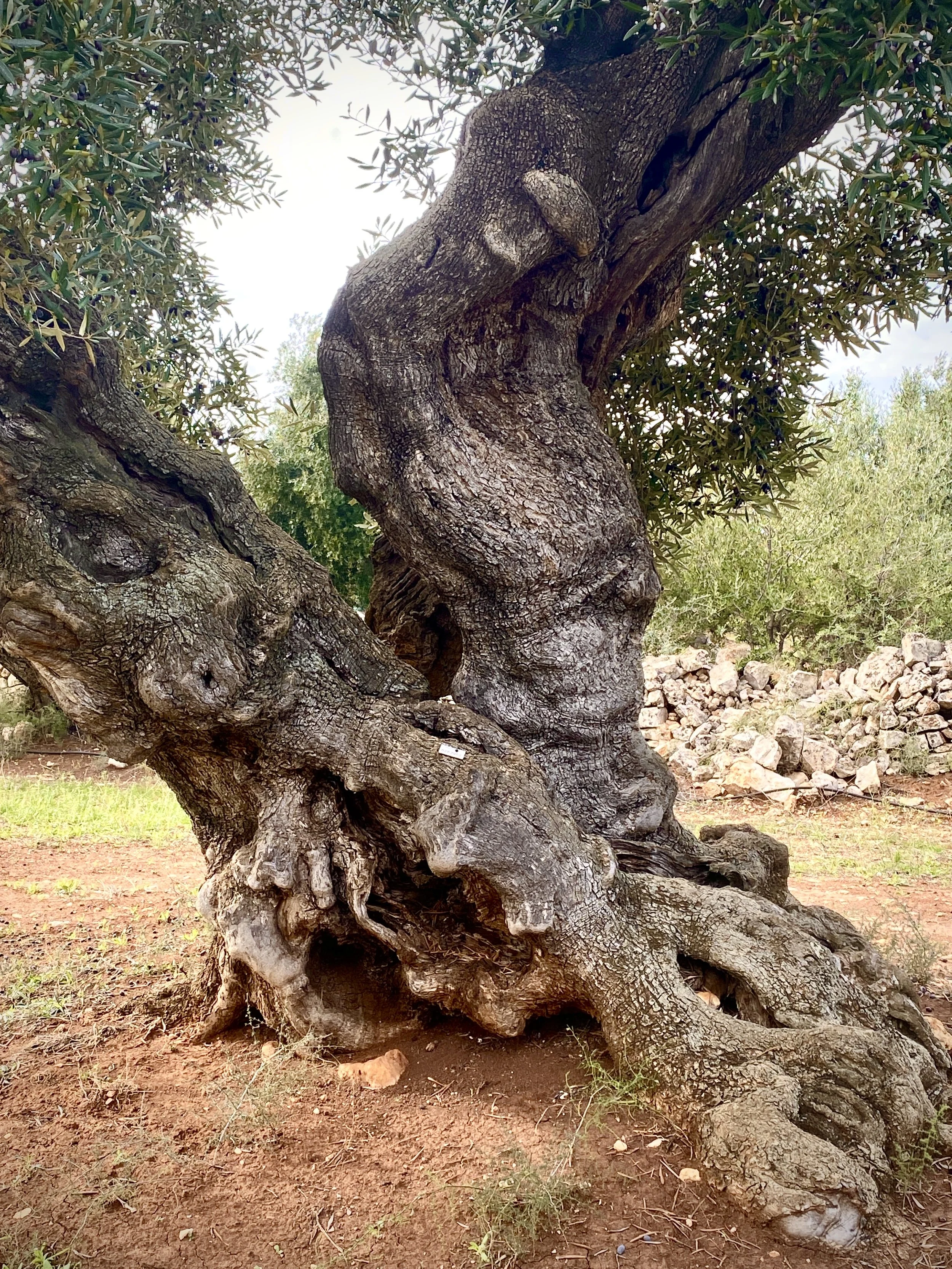
Thousands of years is hard to fathom, so let me put it in context:
Some of these trees were planted when the first Olympic Games were underway in ancient Greece.
Those roots have seen things.
Interestingly, the taste of the olives is the same from nubile, young trees or ancient, wizened ones. I’m sure there’s a metaphor in there somewhere, but I’ll leave that to you, fair reader.
It was hard to leave those trees and follow everyone underground.
But I’m glad I did.
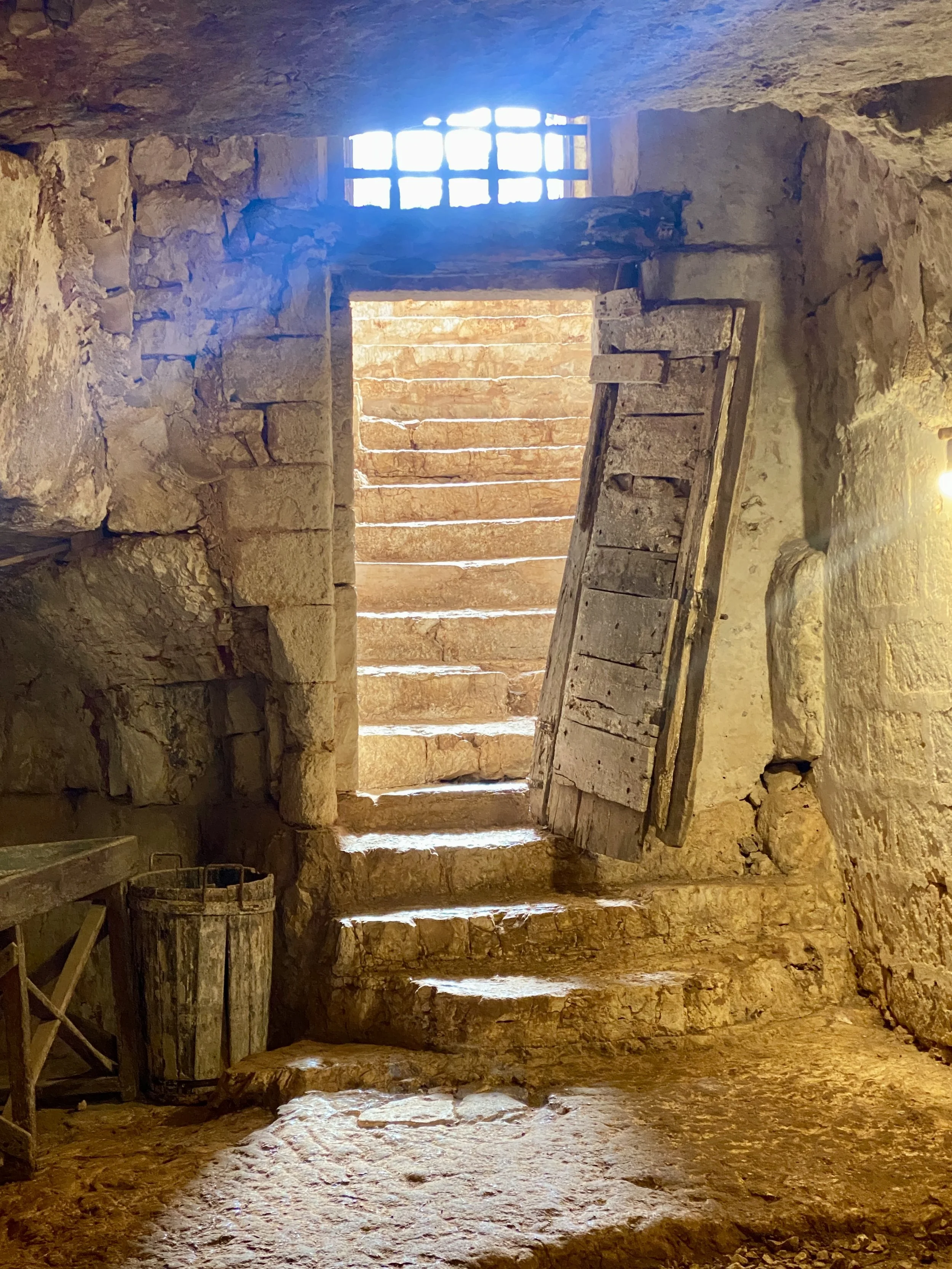
The rocky steps led to an enormous cave with an ancient mill. Long ago, enslaved peoples from Asia Minor and the Balkans did the grunt labor of milling the olives into oil, living and working underground for months at a time.
Why underground?
Feeling clever, I guessed: “Because light destroys flavor compounds? And because it’s cooler and heat is the enemy of oil?”
Nope.
And nope.
I forgot that understanding of polyphenols was not exactly robust in the days when King David captured Jerusalem. People lacked microscopes altogether.
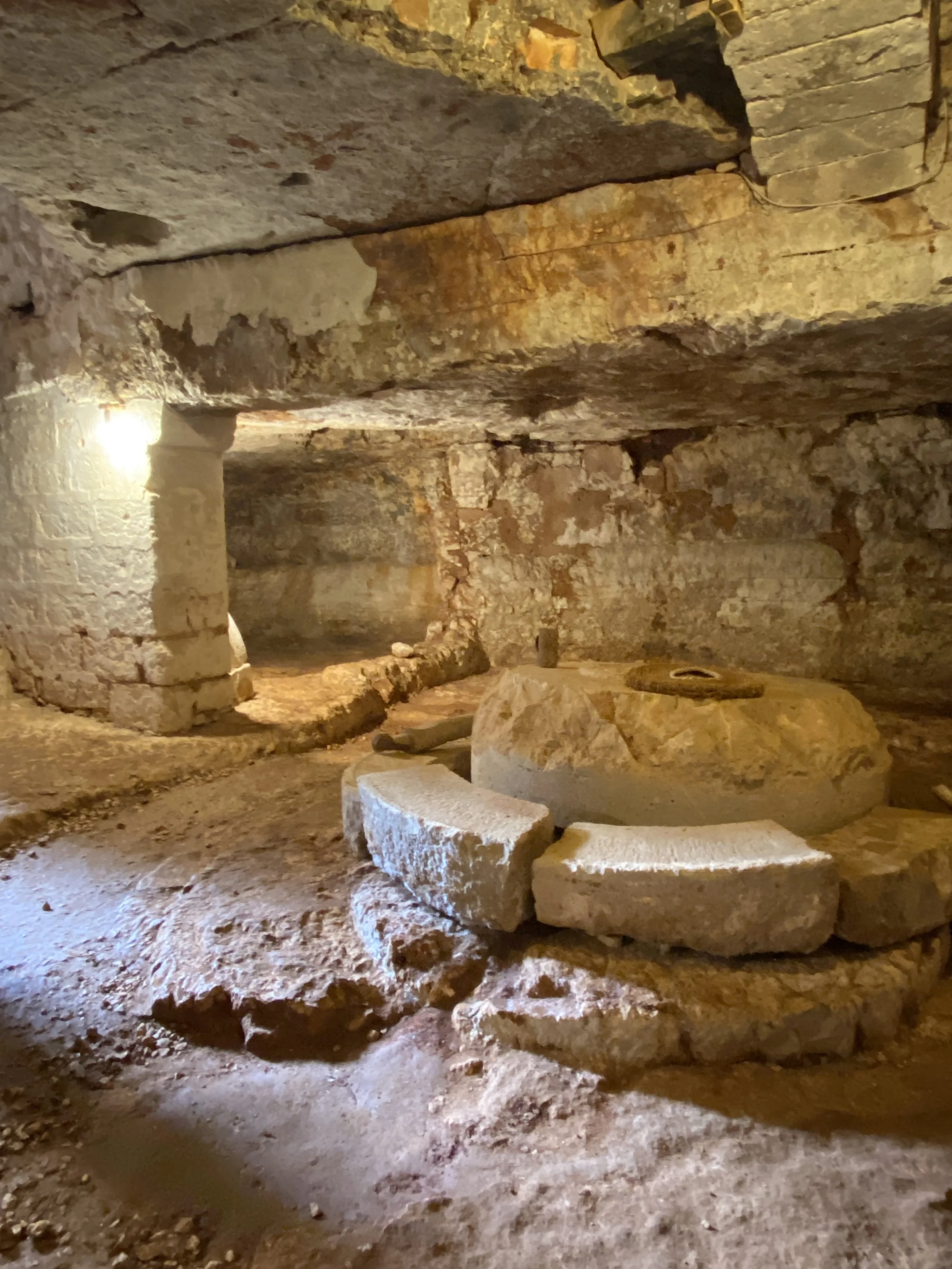
In fact, the cave was warmer—those bodies living and working in it raised the temperature—and the warmth softened the olives, allowing for more oil extraction. Also, olive oil being precious, people liked keeping their mills underground, away from envious, prying eyes.
Like other olive oil mills from the Messapian era, a stone wheel ground the olives, which were then transferred to troughs lined with baskets to strain out the crushed bits, leaving the oil.
From here, we saw the more recent iteration of olive milling (currently, the masseria, like all the ones I’ve heard of in Italy, sends their olives to an independent mill) that was operational in the more recent past. We also got a more thorough sense of life on the masseria across its history as we walked through a humble chapel on the grounds.
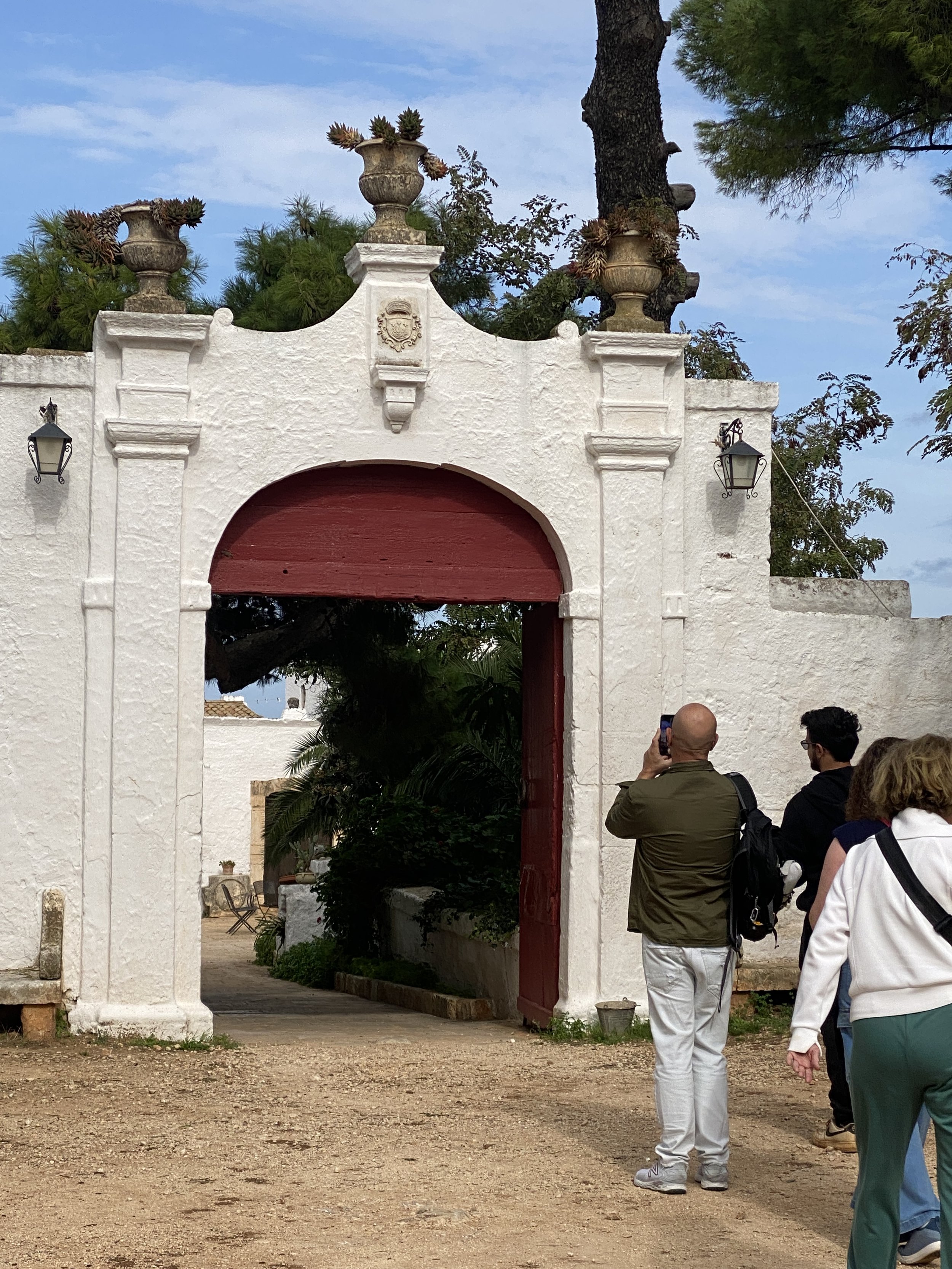
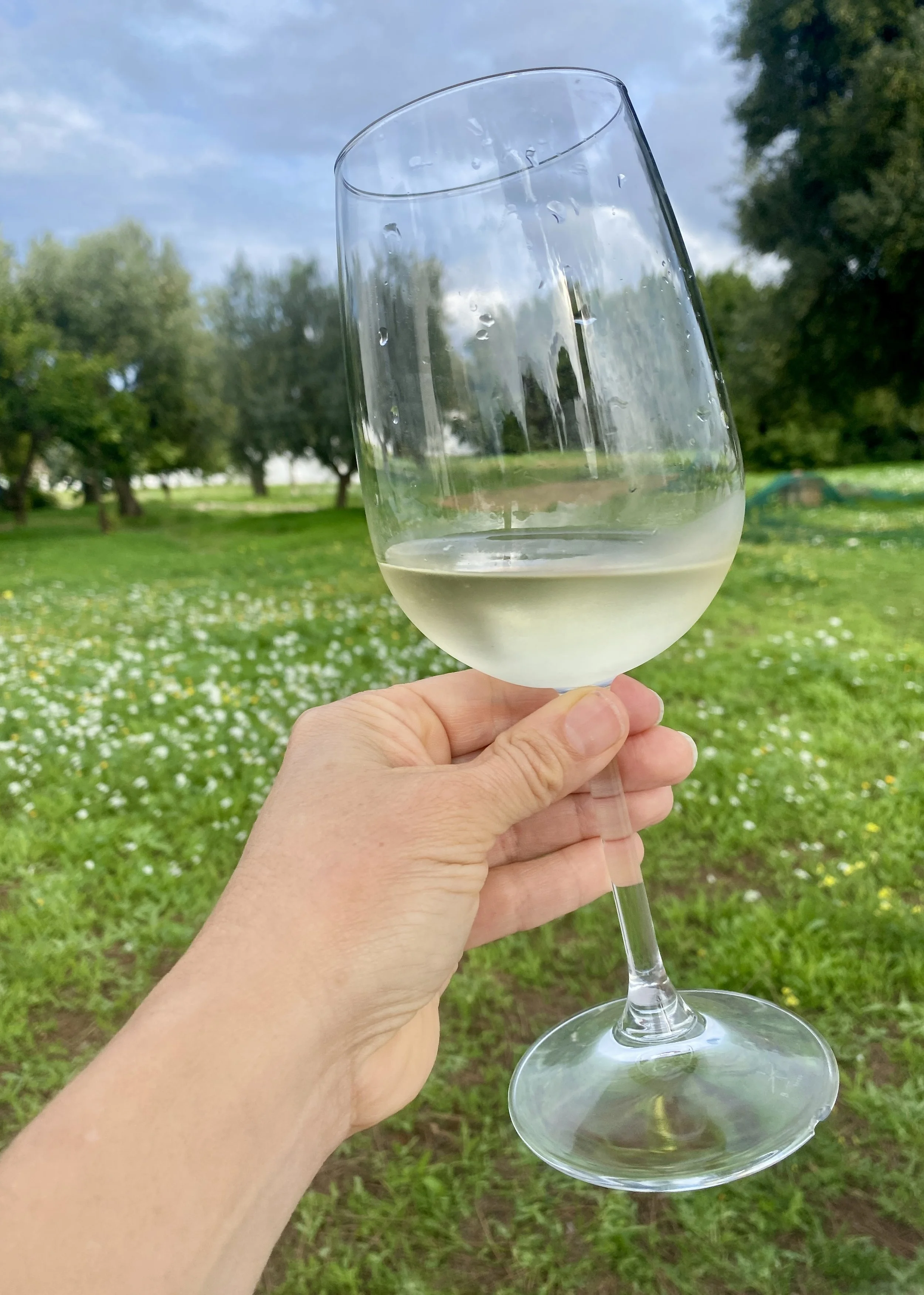
Finally, we were led to the yard behind the masseria, lined—naturally—with olive trees, these with wildflowers flirting with their trunks.
Taking our seats, we began a tasting tour of the olive oils, from lightest to boldest.
This is the kind of adventure worth having.
After, we sat at the table and passed platters of cured meats, beautiful salads of roasted peppers with agrodolce (an Italian sweet and sour sauce), the best fave puree I ever had (Max, noting my eyes rolling back in my head and always anticipating what might improve any experience, asked how they made it, and I happily replicated the fave puree when home), beautiful rounds of bread topped with creamy burrata and meltingly tender tomatoes, little knots of mozzarella to douse with whatever olive oil we liked best, and balls of fried bread with eggplant.
Now, you’ll think that with the crisp sky and the gentle breeze swaying the ancient boughs of olive trees, and the long table filled with laughter and sharing and bottles of olive oil at the ready that I am just making up the following to make you jealous when I add this little detail:
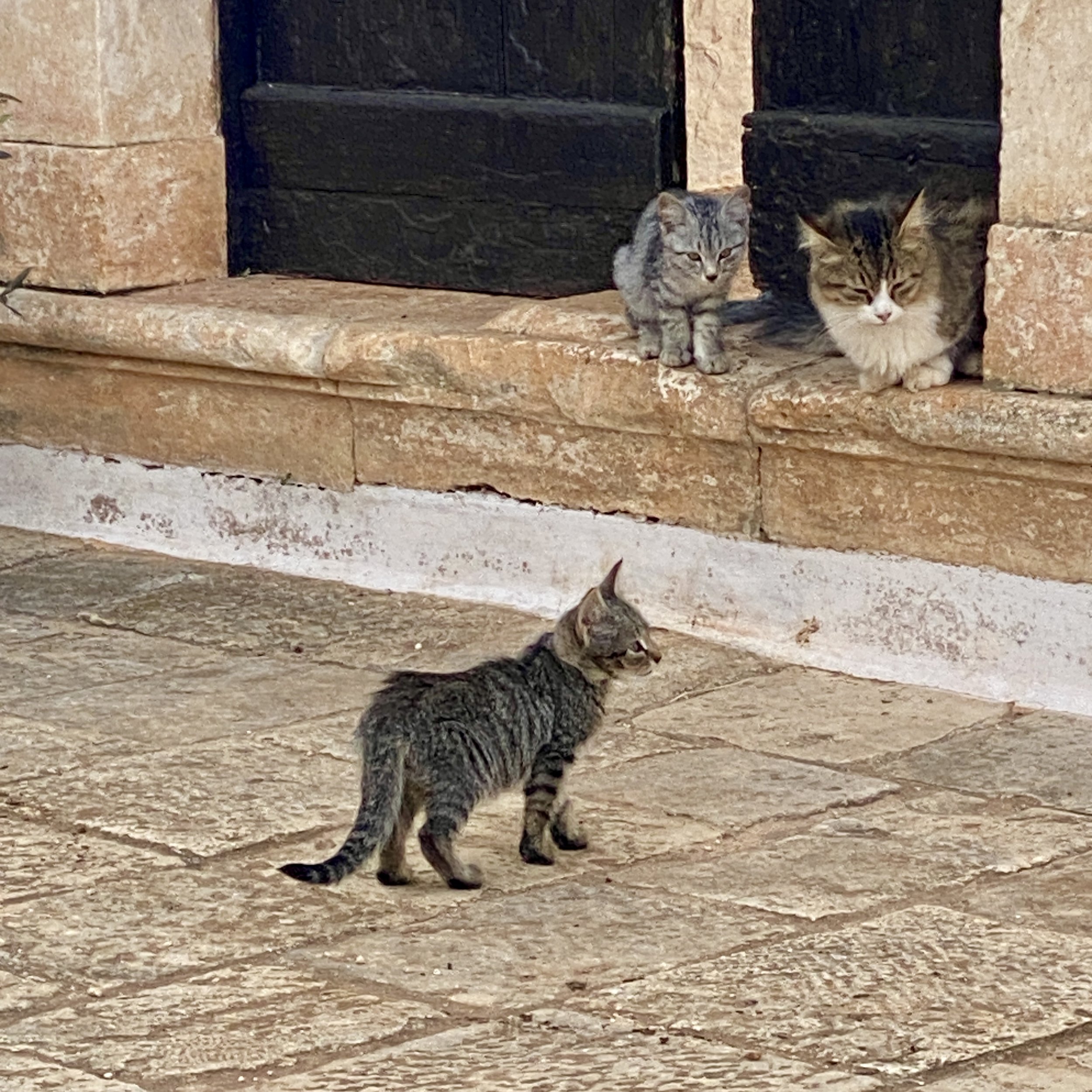
Cavorting kittens circled the table, meowing and playing.
Seriously. I am not making this up.
From the roots of trees plunged for literal eons into Pugliese soil came an afternoon of such lightness, such joy, I’ll remember it always.
Puglia will dazzle you with its whitewashed towns and turquoise coves, yes—but it’s underground where it reveals its true soul. In the caves hollowed by ancient hands, in the roots of millennia-old trees, in the clay shaped into something useful and beautiful, Puglia whispers its history. And if you listen closely—ideally with a glass of Primitivo in hand—you might just hear it tell you who it has always been.
If you go (and I hope you do!), I recommend checking in with Ciao Andiamo about their options, as if you can go with a guide who can get recipes and open worlds like Max, you will come home all the more sustained.
Want to discover more off-the-beaten-path Italy? Click the button below and I’ll instantly send you the Italian Hidden Gems Starter Kit, complete with practical information on five destinations most tourists miss. The kit includes when to go, what to eat, where to day trip, and MORE!